
Notes on Two and a Half Millenia
What Greece Taught Me about Resilience, Reinvention and the Right to Belong

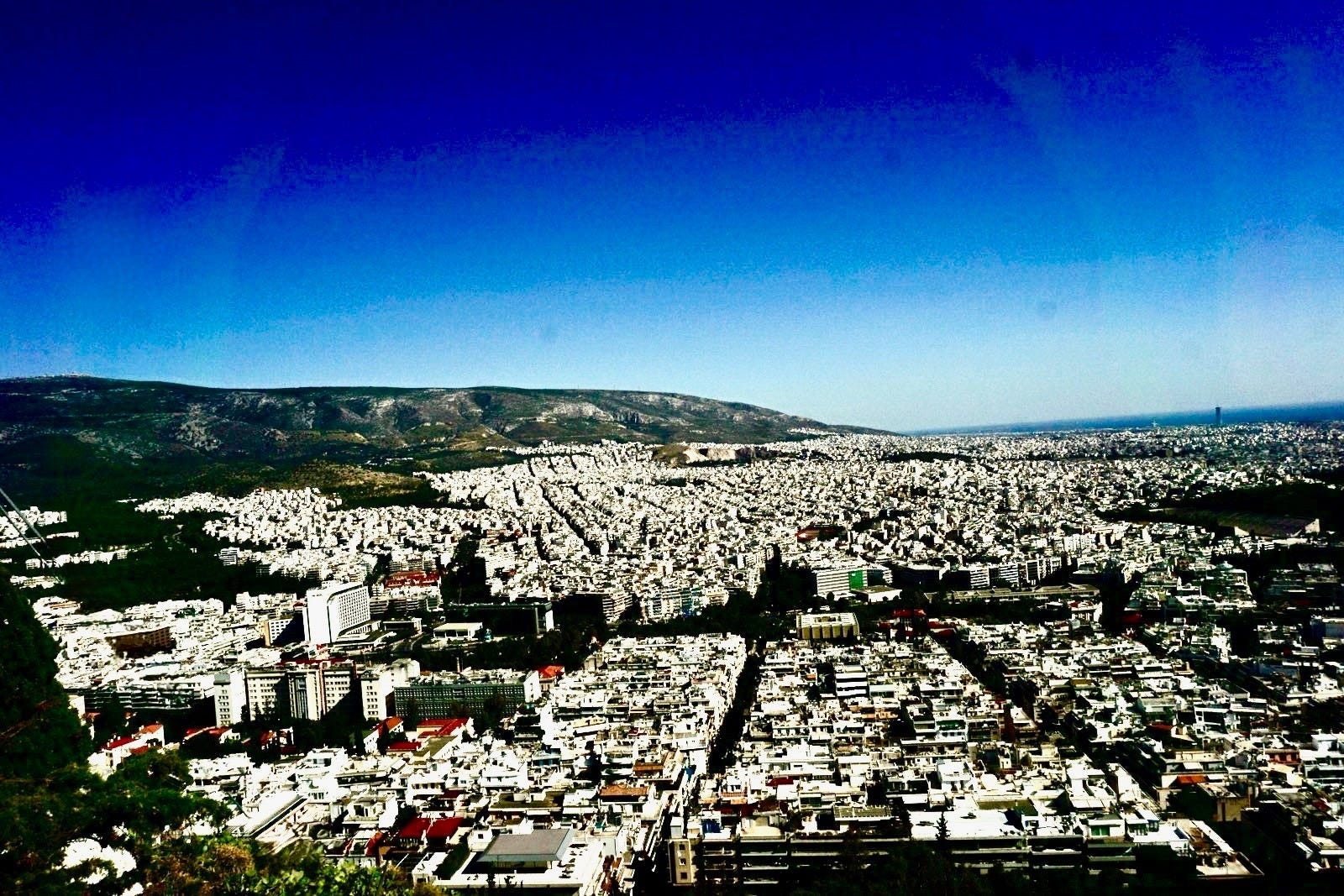
This summer, on the cusp of America’s 250th birthday, my family boarded a flight bound for Athens. Back home, the milestone felt less like a celebration and more like a battleground. We left behind a country locked in a fraught, deeply anxious wrestling match over its own identity—one where a white supremacist and nationalist movement is actively trying to erase history, roll back voting rights, and gerrymander Black political power out of existence to keep the nation from evolving. It is a project driven by a desperate, terrifying panic: the conviction that they are going to lose their country if they don’t take it back and subordinate everyone who attempts to challenge them. Watching us endlessly argue over whose America is the truest left me exhausted; all of the hand-wringing and finger-pointing had just made me profoundly tired and sad.
Then, I stepped into a civilization whose memory stretches back twenty-five centuries.
Somewhere between Athens and Delphi, between playgrounds in Crete and hillsides filled with ancient olive trees, the staggering contrast of scale began to work on me. I spent two weeks quietly cataloging impressions, storing away moments in my head. Before long, I realized that every one of these mental notes was chasing a singular, urgent question: How does a people continue becoming something new without forgetting who they are?
As the dispatches that follow reveal, Greece has outlived the illusion that survival requires standing still. It is a place that has been forced to reinvent itself over and over again, yet it remains entirely, effortlessly secure in its own skin. These pages are my attempt to look through the wider lens of two and a half millennia and to find a horizon beyond my present heartbreak.
Note: Deep gratitude to Alana Ross and Yvonne Segars for generously sharing their photographs and helping bring these dispatches to life.
The Road to Delphi
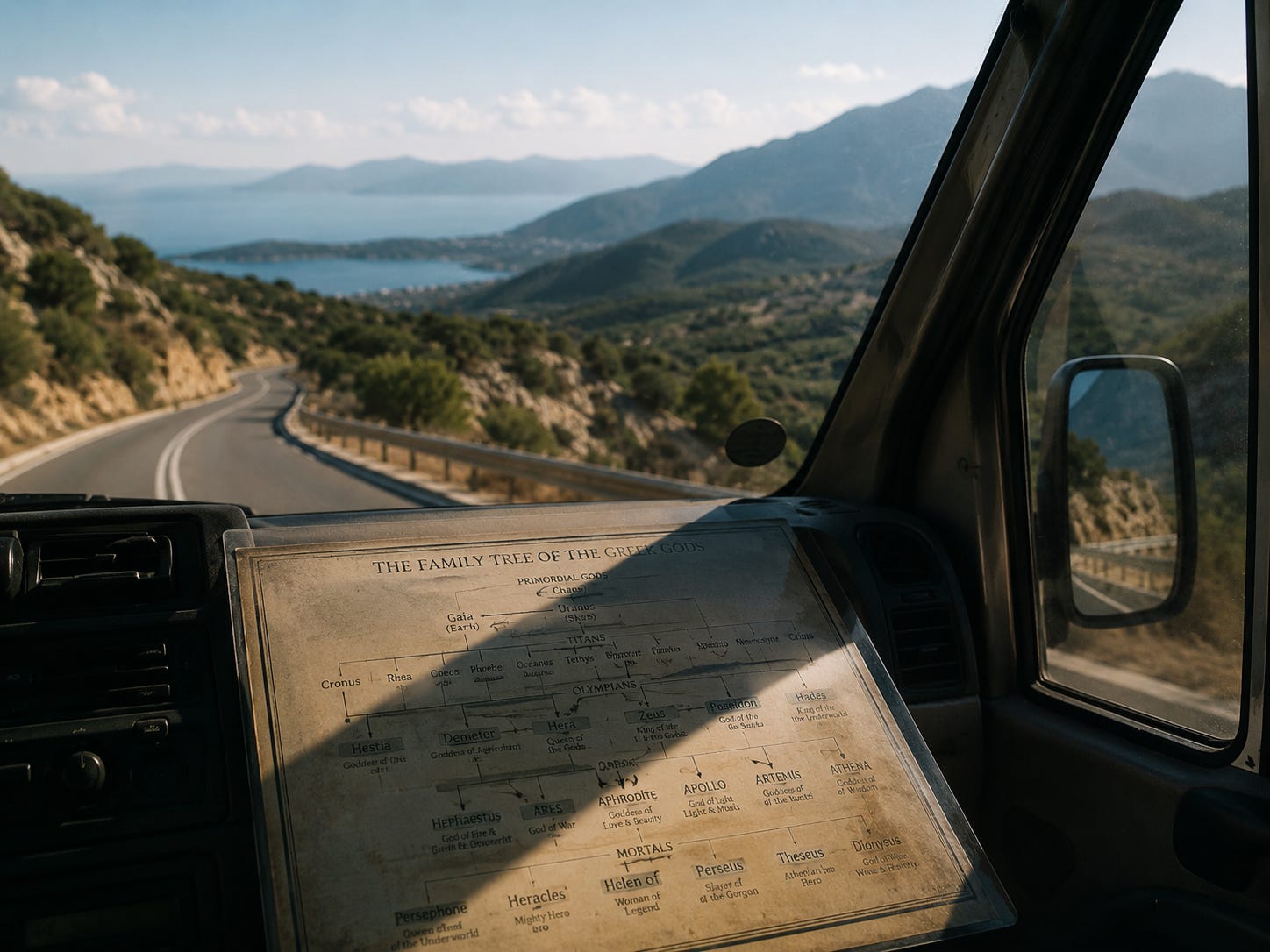
Kostas begins talking excitedly before we even clear the Athens city limits en route to Delphi, the ancient sanctuary of Apollo.
He looks to be in his late thirties, his dark hair pulled back into a tight bun, with a smile that seems to swallow his eyes every time he laughs, which is nonstop. Before long, he is pointing toward the apartment building where he lives, telling us about his two dogs, and explaining his rhythm of working eight months straight during the tourist season so he can spend the other four traveling the world. There is something immediately disarming about him; he isn’t selling himself or executing a script. He simply seems happy to have our family in his van.
The day before, we had climbed the Acropolis with an officially licensed guide, a former architect who had returned to school for two years just to earn the right to interpret those stones. He wore a badge around his collar to signify his status. He was scholarly, meticulous, patient with two small kids, and deeply academic. Officially, Kostas is just the guy taking us to Delphi. But as the city gives way to winding mountain roads, the distinction between the tour guide and the driver fades.
Almost without warning, Kostas digs into his backpack and pulls out a laminated family tree of the Greek gods. He begins introducing us to the primordial gods, tracing the lineage from Chaos and Gaia forward. As he talks, he shows how each successive wave of deities, from those primordial forces to the Titans and finally the Olympians, served a different purpose for a different age, adapting as the psychological needs of the civilization evolved. They gave humanity a baseline of certainty, translating the terrifying and unexplainable forces of nature into a structured narrative framework. At one point, he mentions casually that he had learned English as a boy by watching American cartoons. I relish that detail. American cartoons helped shape his childhood vocabulary, while Greek mythology, and its modern comic-book descendants, helped shape my own early imagination.
For nearly two and a half hours, Kostas’ voice fills the car. As far as I can tell, he isn’t pantomiming enthusiasm for a family of tourists. He is doing something much more earnest and profound. Civilizations do not ultimately survive because experts preserve their remnants behind glass. Ordinary people decide the story is theirs to tell. Kostas may not have been licensed to interpret Greece out in the open, but inside his vehicle, he claimed his right of custody over its memory.
Listening to him, I feel a striking absence of the anxiety and historical weight that had filled my mind back home in the weeks leading up to America’s 250th birthday. He moves through his history without a trace of insecurity or defensiveness. He carries his ancestry with effortless confidence, generosity, and delight. It is a stark reminder of what it looks like when a people are entirely secure in their inheritance.
Perhaps that ease isn’t accidental; perhaps it is earned. When a culture has been conquered, occupied, fractured, and rebuilt over thousands of years, repeated disturbance has a way of stripping away illusions until only the essentials remain. History has repeatedly asked Greece whether it would survive, and in the process, its people have become exceptionally clear about what is actually worth carrying forward.
Mecca on the Mountain
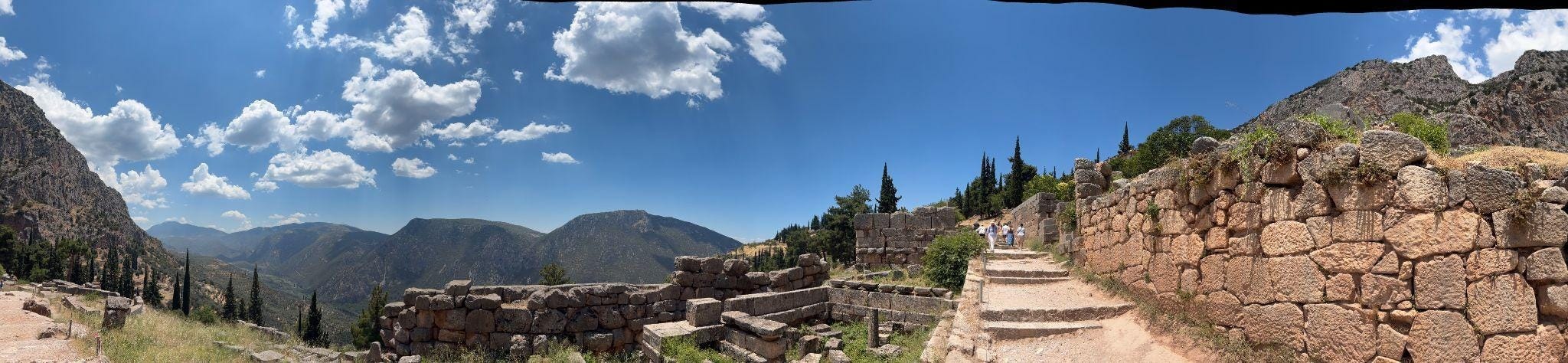
The climb is steeper than I expected. The midday sun has settled over the mountain with a kind of brutality befitting a pilgrimage to a promised land, radiating off the stones in visible waves. We move slowly, stopping every few minutes to scan another monument, another fragment of a civilization that once drew pilgrims from across the Greek world. The kids endure as best they could, gulping the bottled water Kostas handed us before saying goodbye, but with every switchback our encouragement seems less effective and the shade, scant as it is, more appealing. Then I round a bend.
About twenty yards ahead of me stands a Black man in his 60s dressed head to toe in New York Knicks championship gear—a cream-colored hat, a matching shirt, and pristine shorts. Clean. Immaculate. I had tried unsuccessfully to get my own championship gear before we left for Greece. This brother had clearly planned ahead or had a special hookup.
I laugh out loud. What are the chances?
Weeks earlier, New York had erupted. Anyone who lived through that playoff run knows it eventually became about much more than basketball. Every game became a neighborhood gathering. Every win spilled strangers into the streets. People hugged people they had never met. The parade became legend in its own right.
I walk over. I don’t introduce myself. I don’t ask where he was from. I just smile and say the only thing that make sense.
“We did it.”
He looks at me for less than a second before breaking into a wide grin. “We did.”
We hug. Twenty seconds later, we are both disappearing around different corners of the mountain, heading back toward our families.
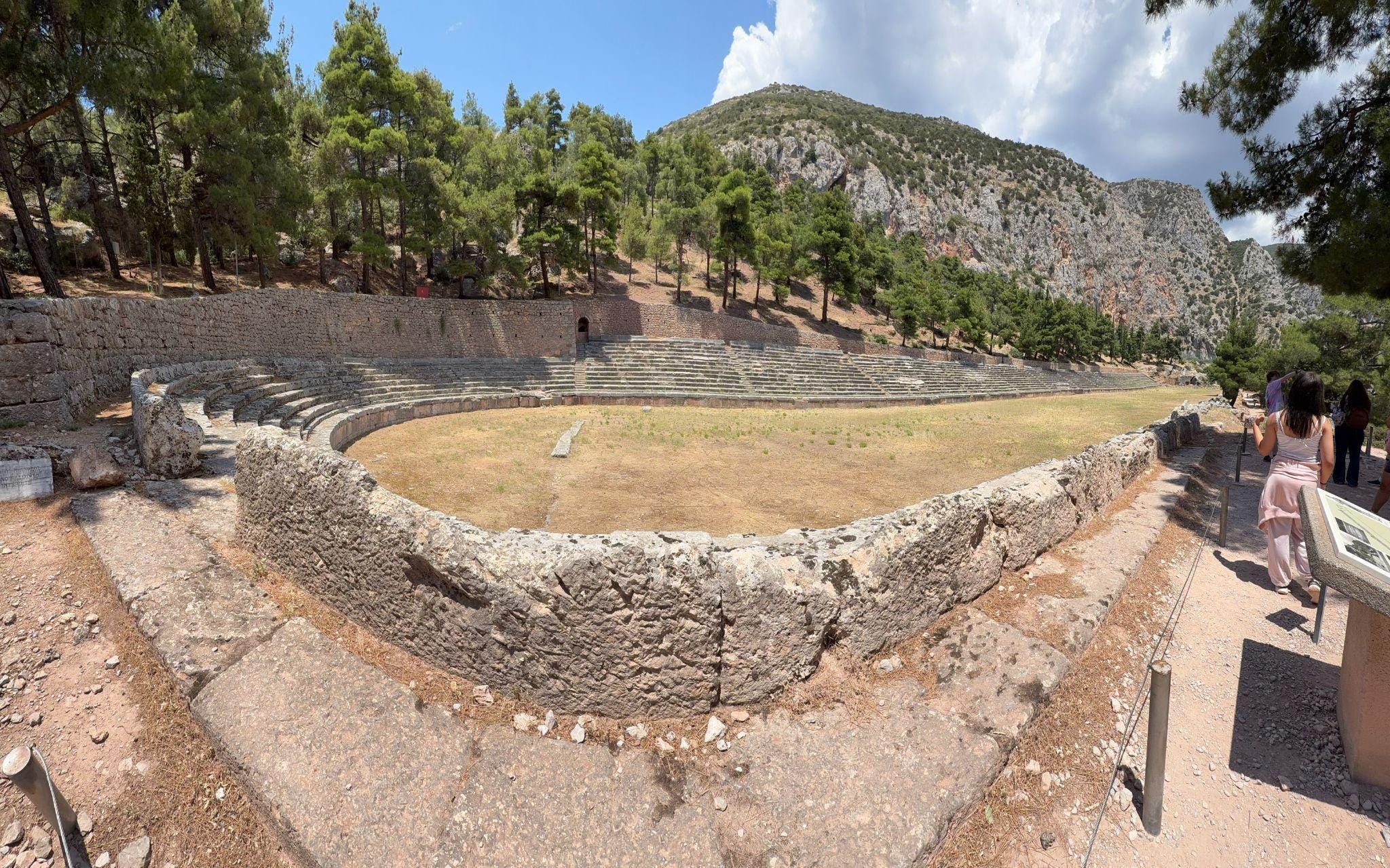
I think about that exchange on the ride back to Athens. Delphi was once one of the great gathering places of the ancient world. Pilgrims traveled extraordinary distances seeking wisdom, offering thanks, competing in athletic games, watching performances in the theater, and participating in rituals that reminded them they belonged to something larger than their individual city or village. Religion, sport, politics, music, and civic life all converged on the same mountainside. What had happened in New York over those remarkable weeks wasn’t entirely unlike that. And then, somewhere on that steaming mountain, surrounded by the ruins of one of history’s great civic and spiritual centers, I encountered another Black American carrying a small piece of the team we both loved.
Playground Rules
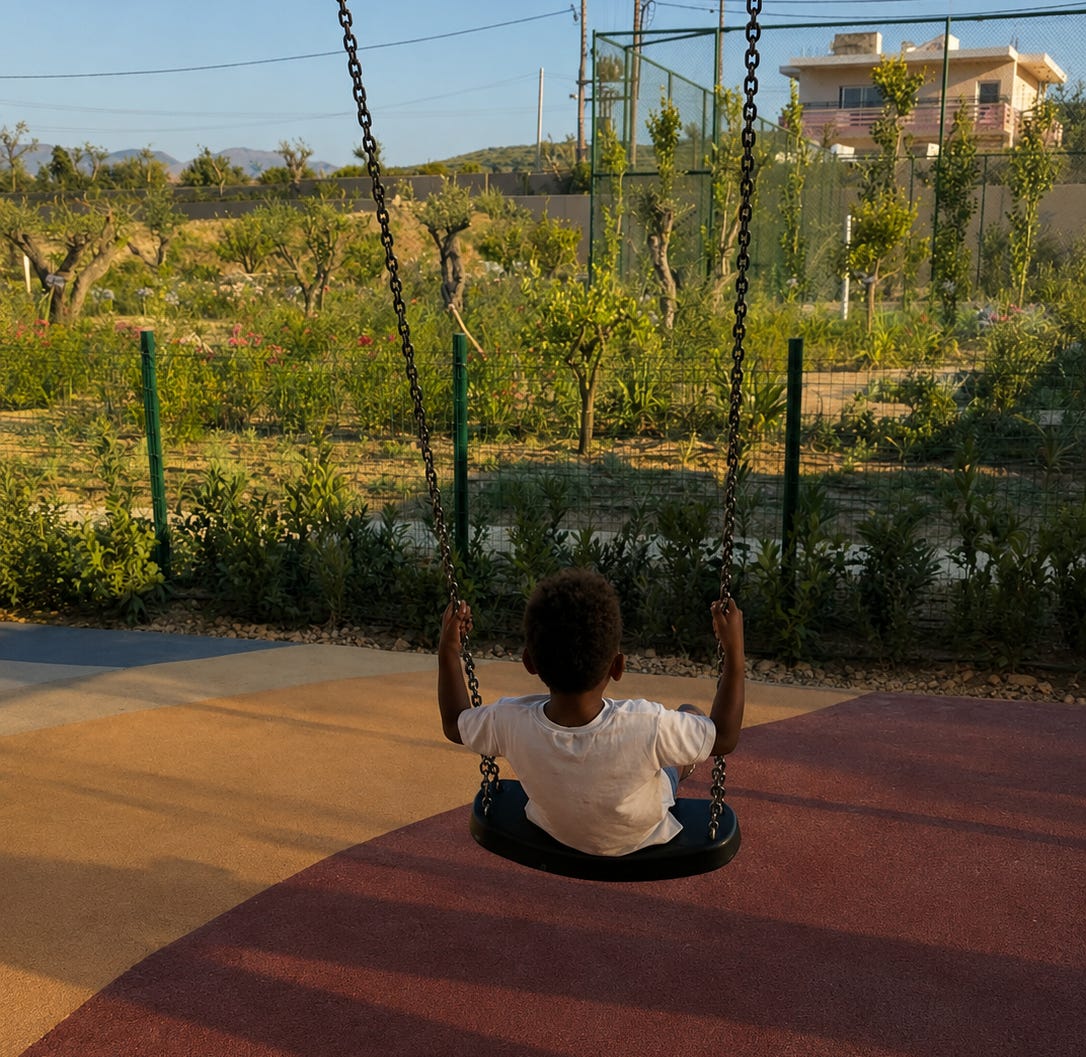
There are never enough swings. Not in Washington. And, evidently, not in Crete.
The playground at our resort is a tiny international negotiation: children from different countries, speaking different languages, carrying different playground rules, all trying to decide whose turn comes next. From a distance, I watch my almost-five-year-old son standing with a small cluster of kids around the lone swing.
By the time I notice what is happening, they have already figured it out. One by one, they play rock, paper, scissors. The winner climbs onto the swing. Everyone else waits for the next round. Whatever disagreement existed before I arrived has already disappeared into a simple game whose rules none of them needs translated.
I stand there wondering how my son learned to play. Later, I ask him. He shrugs. So I ask his big sister.
“Oh,” she says matter-of-factly. “I showed them.”
Before I can ask another question, she is off again. That is when it hits me. Well before I walked over, my daughter offered the group a shared language. Then she stepped back and let it become theirs.
I stand there in awe of them.
Independence Day
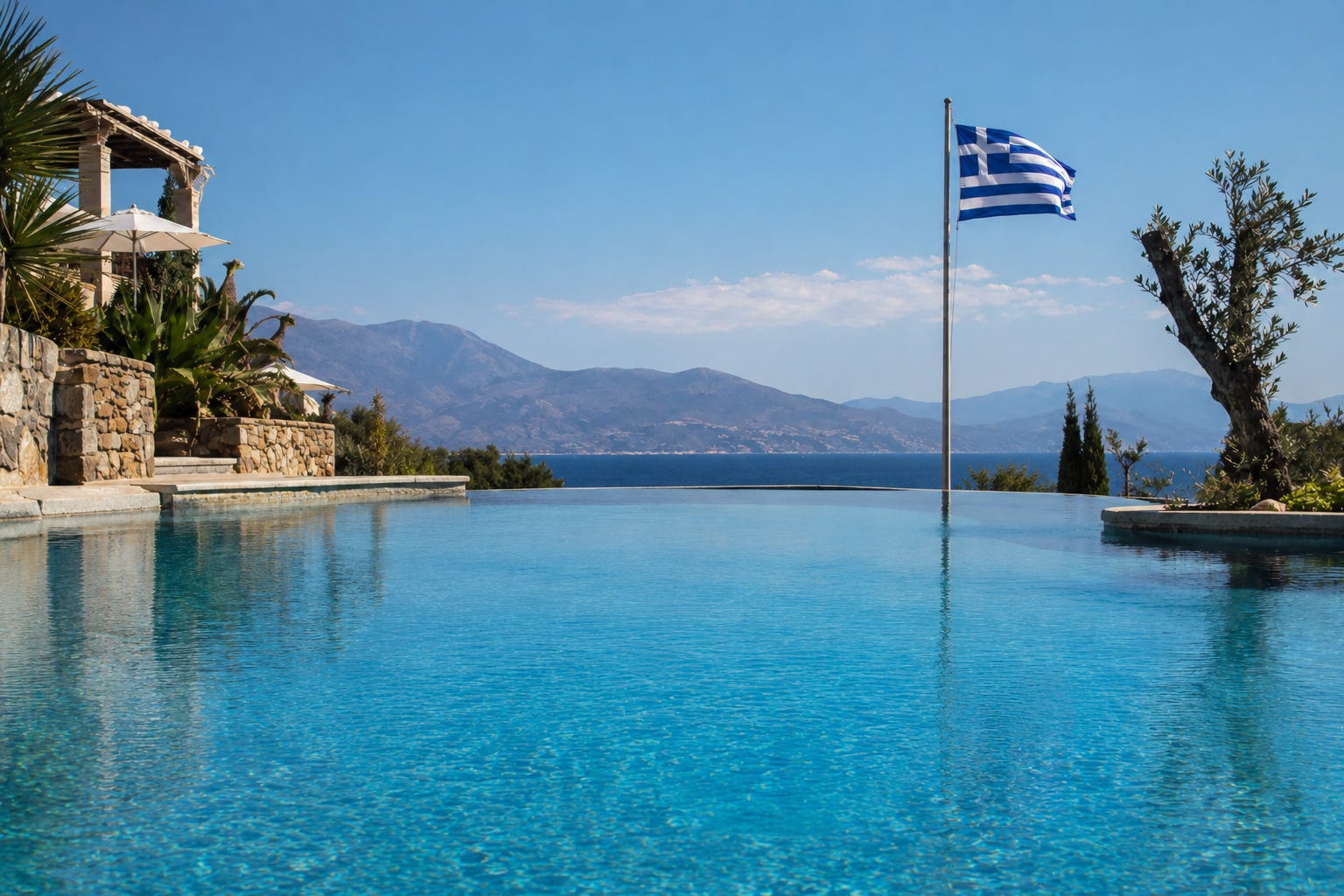
The dad swims over with a grin. His son had found my children in the pool.
“Whenever he hears the American accent,” he says, nodding toward his son, “he gravitates toward it.”
Within minutes, we are standing waist-deep in the water, talking while pretending to supervise. He is a Navy lawyer finishing an assignment in Germany before heading back to the States. Our children are about the same age.
Above us, a Greek flag waves lazily in the afternoon wind. As far as I can tell, we are the only Americans at the resort.
In almost any other context, we probably would have passed each other without a second glance. But on America’s 250th birthday, seven time zones from home, our accents are a kind of gravity
The conversation never ventures beyond the shallow end. We talk about our kids. We talk about Germany. We talk about travel. We talk about the peculiar logistics of moving a young family across continents. I suspect that if we keep swimming, we will eventually reach the fault lines that divide so many Americans. Maybe we would discover that we voted differently, saw the country differently, understood this moment differently.
We never find out because we choose the safe parts of biography. We choose curiosity over certainty. We choose commonality over division.
Living in Washington, I have found it frighteningly easy to believe that American politics occupy the entire horizon of human existence. Standing in waist deep water beneath that Greek flag, I can see that it does not.
Around us, children are still laughing. Families are still building lives. People are making dinner plans, heading to the beach, arguing over sunscreen, and wondering where to travel next. Greece is busy imagining its own future. So is the United Kingdom. So is Germany. So is every family gathered around that pool, carrying a history entirely separate from ours.
For one afternoon, removed from the noise and anger, two American fathers stand in a swimming pool and watch their children play. We do not solve anything. We did not debate anything. We simply share a small piece of home. For a few quiet hours, we are each other’s America.
Late Night Hoops
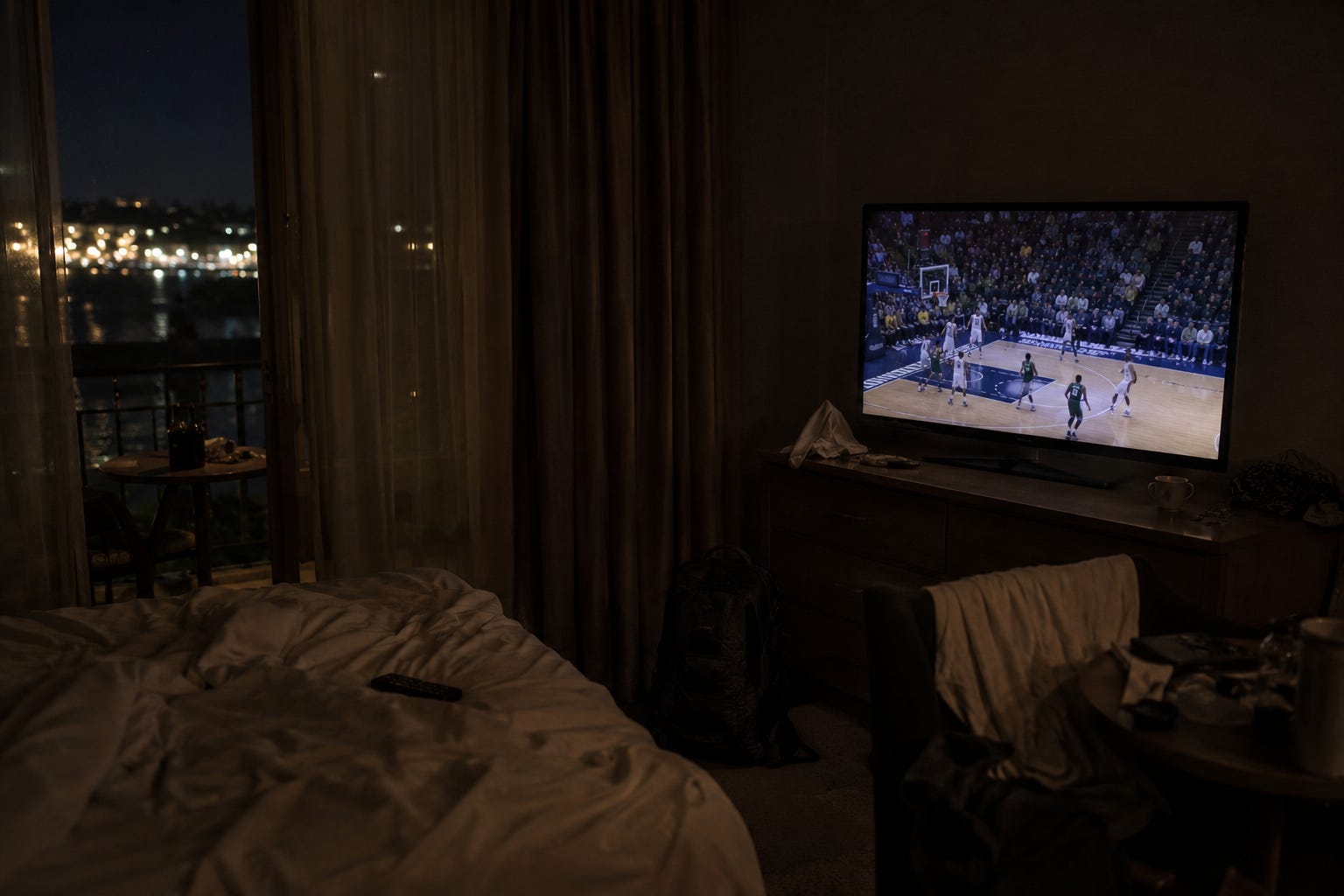
I lay in bed flipping through television channels, most of them broadcasting languages I couldn’t understand. There was always soccer somewhere. Sometimes World Cup replays. Occasionally a live match. Then I stumble onto a LigaACB playoff game between Real Madrid and Saski Baskonia.
Back home, this is the deadest stretch of the basketball calendar. The NBA season has ended. The draft is over. Summer League hasn’t begun. If you’re the kind of basketball fan I am, you spend those weeks refreshing your phone for the latest free agency transaction more than watching games because there simply aren’t any.
Yet here is a packed arena and a game of consequence. Within a few possessions I start recognizing faces and names. One time NBA rotation players. Guys who had spent a year or two in the league before disappearing from American broadcasts. Players I’d seen in Olympic tournaments or on the end of benches before losing track of them entirely.
Turns out they hadn’t disappeared. I had; or more accurately, my attention had.
I grab my phone and fired off a text to one of my basketball threads.
“Look who’s playing.”
Within seconds my buddies are responding.
“I wondered where he went.”
“I forgot about him.”
“Where has he been?”
The answer, of course, is simple. Playing basketball.
As the teams battled on the court, I think about the careers these players build. Spain. Turkey. Greece. Italy. France. Japan. Rwanda. One contract after another, chasing another chance to keep doing the thing they’ve spent their lives learning to do. It reminds me, once again, how easily Americans mistake the boundaries of our own attention for the boundaries of the world.
That thought lingers the next morning as I pass another billboard with Giannis Antetokounmpo’s face on it. I see him everywhere. Bus stops. Airport advertisements. Even a family shop at the Athens airport run by Giannis and his brothers. It’s no longer news that Europe has extraordinary basketball and its own traditions and leagues Yet the defining face of basketball in Greece is still an NBA player.
Part of it is Giannis himself, of course. His story belongs to Greece in a way no imported star’s ever could. But part of it is also the extraordinary reach of American popular culture. The NBA doesn’t simply export basketball. It exports the mythology of the game in a way that is unparalleled. As I write this, the league is moving toward launching NBA Europe, an expansion that will almost certainly reshape the landscape of the European game. Whether that’s an opportunity or a loss—or some complicated mixture of both—I honestly don’t know.
What I do know is this: Lying awake in a hotel room in Greece, I stumbled into a reminder that the basketball world is much larger than the one I usually inhabit. Sometimes travel doesn’t introduce you to something new. It introduces you to something that was always there. You just weren’t looking.
The Ecology of Endurance
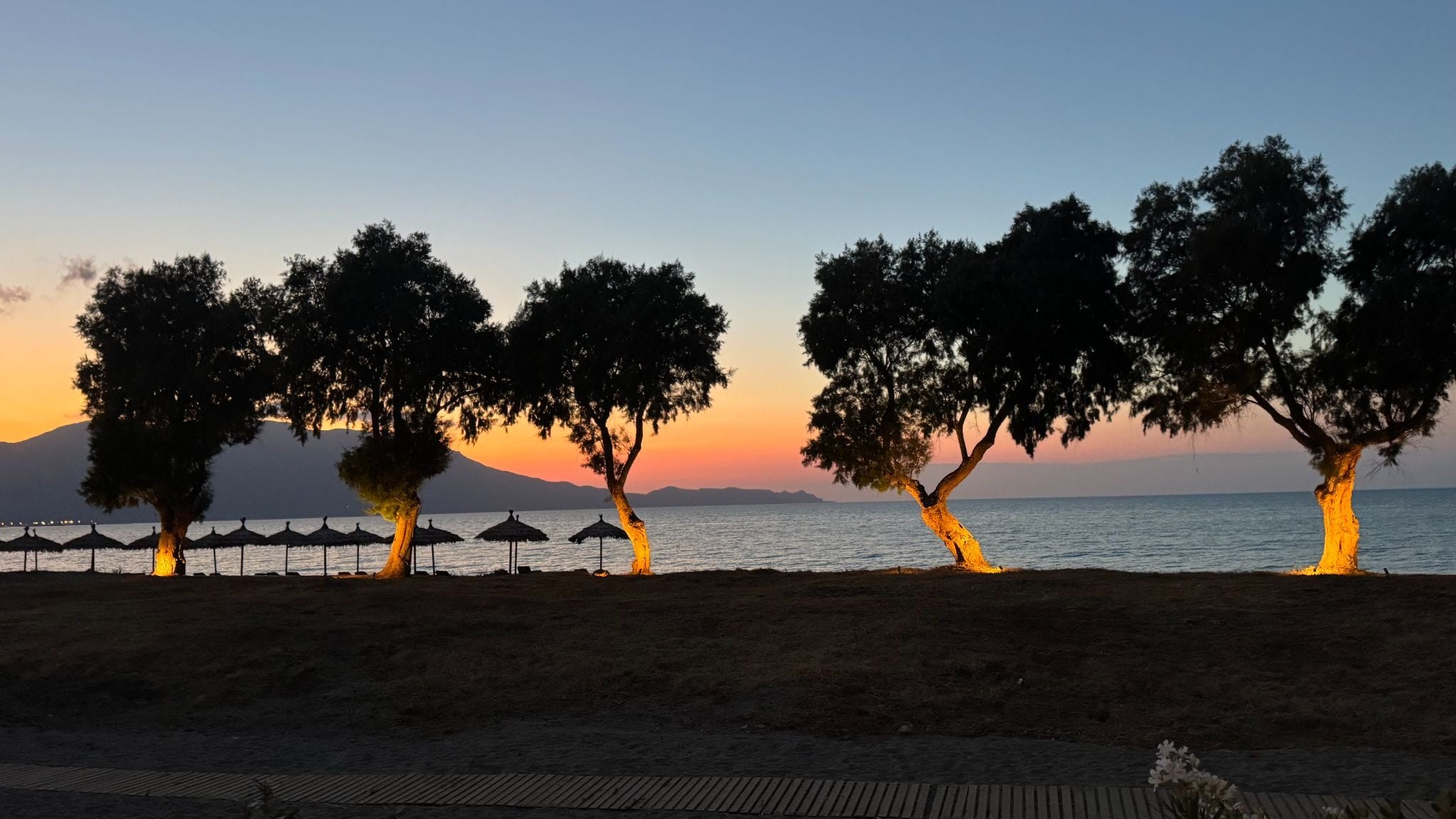
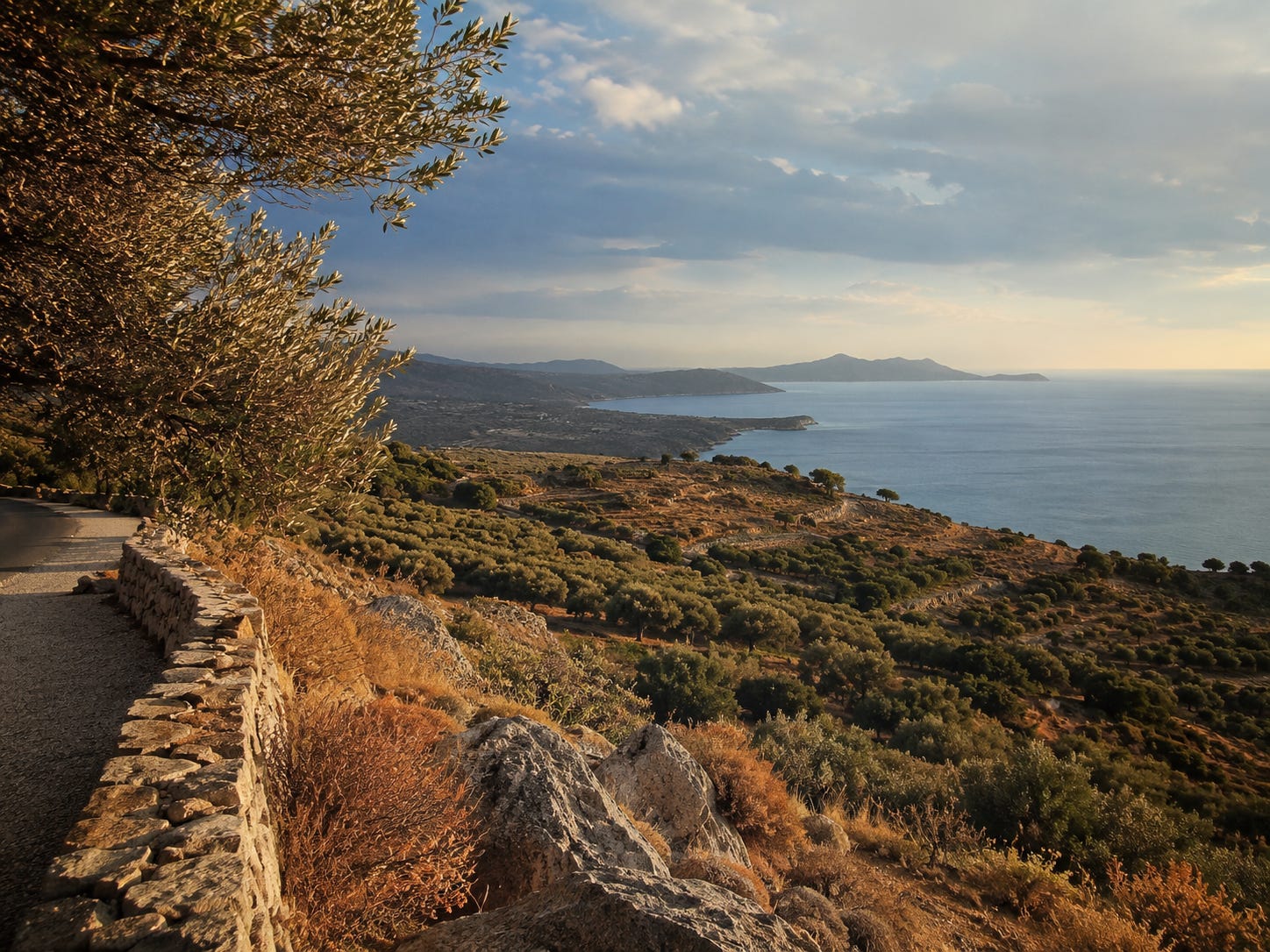
The road to Elafonissi Beach narrows almost immediately after we leave our hotel grounds in Kissamos, sharp turns giving way to long, steep climbs through the mountains. We passed through one small village after another, places that looked as though they could have existed fifty years ago, or five hundred.
My first instinct is a deeply American one. I find myself trying to reverse-engineer the local economy. What did people do for work? Where were the employers? How did these villages generate enough income to survive? So much of the way we are conditioned to think about a place begins with productivity, markets, and wages. We are taught, almost without realizing it, to understand community through the ledger of credits and debits, employment and consumption.
But somewhere along that winding drive, I realize I am completely overlooking how much of life here still begins with the land itself. Olive groves stretch across hillsides that seemed impossibly steep to cultivate. Every time we roll down the windows, the air is ripe with the fragrance of wild thyme, oregano, and sage. Bees drift lazily between flowering shrubs. Honey, herbs, olive oil—these aren’t quaint relics of an older economy preserved for tourists. They are still the economy. They are still everyday life, the living tissue of the relationship between these people and the place they inhabit.
Much of what I am admiring as scenery actually evolved for survival. Those fragrant herbs produce essential oils to protect themselves against scorching droughts and insatiable goats. Thick, leathery leaves hold onto precious moisture through long Mediterranean summers, and low-growing shrubs grip the earth to escape the drying winds. Even the famous Cretan honey owes its deep, distinctive flavor to these exact adaptations, gathered by bees from plants that have spent millennia learning how to survive a harsh landscape.
The olive trees fascinate me most. They seem almost inseparable from the island itself. Some have trunks so twisted, hollowed, and weathered they look like they stood as witnesses to the birth of Zeus.
When we finally arrive at Elafonissi, the pink sand is every bit as beautiful as promised. Yet, even that beauty has a history of endurance. Its color comes from countless tiny shells and marine organisms, broken apart by the surf, weathered by the tides, and scrambled by the sea over generations until something entirely new emerged.
Standing on the shore, I find myself wondering whether beauty is sometimes just the accumulated result of countless small adjustments made over extraordinary stretches of time.
As we drive back through the winding, sometimes harrowing mountain passes, I think back to Kostas and the stories that the ancient Greeks told to explain the world around them. Before chemistry explained the fragrance of thyme, or biology explained the resilience of the olive tree, myths were their way of understanding the landscape that sustained them.
Ecology and civilization are two parts of a whole. The terrain shaped what people could grow. What they grew shaped what they ate. What they ate shaped trade, and trade shaped where they settled. The mountains built the roads; the sea built the commerce; the seasons built the ritual. And collectively, over thousands of years of survival, all of that became culture.
The Future of the Past
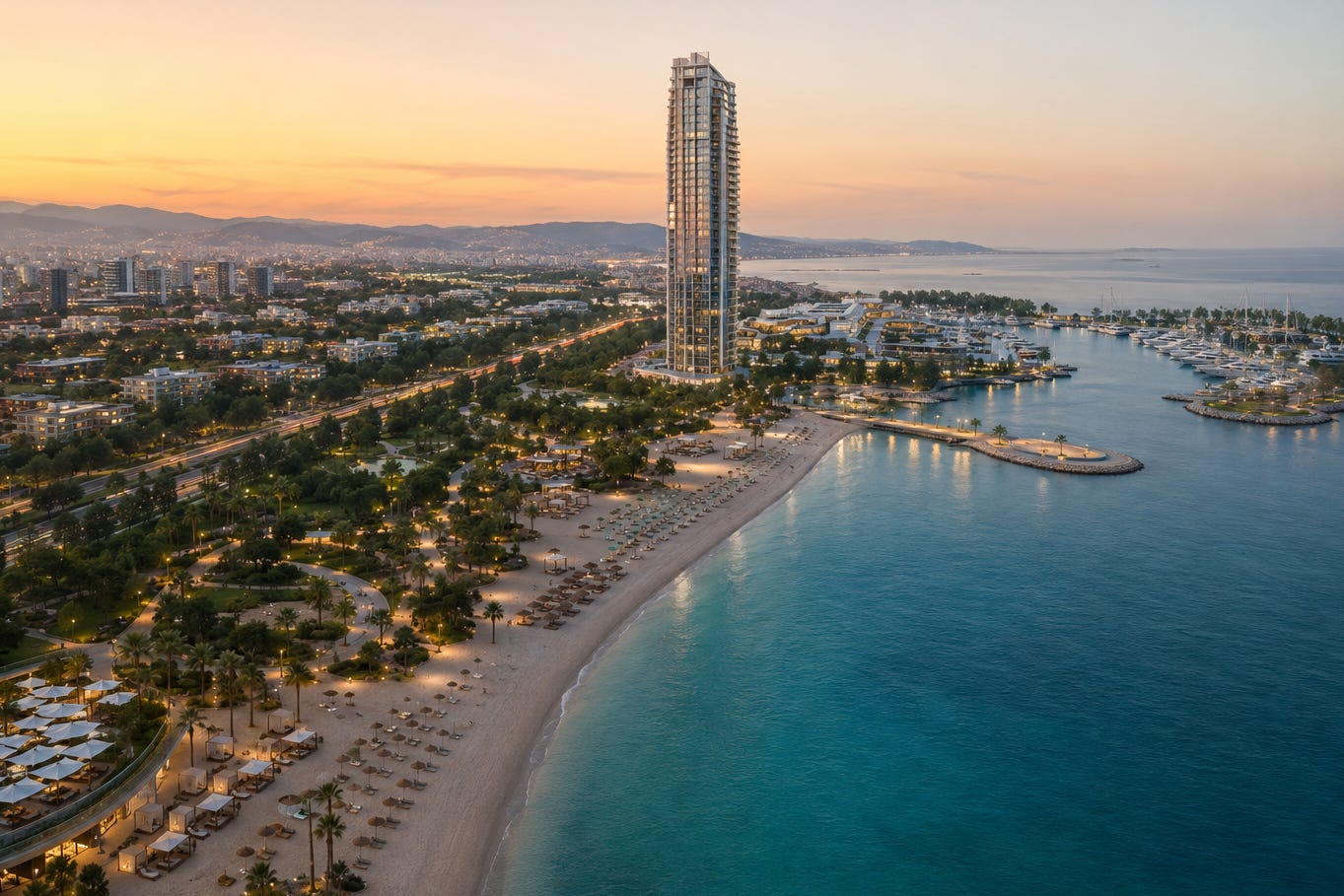
Our driver points out the window and tells us we are entering the Ellinikon development. I nod politely, assuming we are about to pass another large construction project. Five minutes later, we are still driving through it. Only then do I begin to understand its scale.
The former Athens airport is being transformed into one of the largest urban redevelopment projects in Europe. It spans fifteen hundred acres, roughly three times the size of Monaco, and carries an eight-billion-euro price tag. Thousands of homes, hotels, and an entirely new district are rising from land that, until recently, sat largely dormant. At its center will be a coastal park twice the size of New York’s Central Park. The numbers are staggering, but it is the ambition that makes my jaw drop. This is a new vision of Athens and, in many ways, a statement about where Greece believes its future will be built.
The planners began with a simple premise that we cannot seem to agree on back home: the climate of the future will not resemble the climate of the past. Everything else follows from that decision. Renewable energy is foundational. Water is captured, reused, and treated as one of the city’s most precious resources. Green space is infrastructure designed to cool Athens through increasingly punishing Mediterranean summers. Buildings, transportation, parks, and the coastline itself are being imagined as parts of the same living system.
Thousands of years ago, a flourishing capital meant orienting civic life around the gods and the stories that helped people understand an unpredictable world. Ellinikon reflects an understanding of the future shaped by climate science, ecology, engineering, and long-term systems thinking. In both cases, the city is organized around what its people believe will determine whether they flourish.
Anchoring this vision of the future is a skyscraper that will permanently alter the skyline of Athens. For the first time in more than two millennia, another structure will stand higher than the Acropolis. Had someone told me that before I arrived, I would have assumed the decision had torn the country apart. Maybe it has generated debate. But that is not the emotional register I encounter. The people I meet do not carry themselves like a nation worried about forgetting itself.
It occurs to me that this assurance may have been earned through repeated reinvention. Greece’s financial collapse following the global financial crisis is not ancient history. Barely more than a decade ago, the country had become global shorthand for debt, austerity, and economic crisis. Today, Greece is one of Europe’s fastest-growing economies. Next month, its capital markets are poised to regain developed-market status, another milestone in the country’s remarkable recovery.
In that light, Ellinikon feels less like a construction project than a coronation. A country that has spent the last decade proving it can recover is now trusting itself to imagine again.
As we drive past cranes stretching across what had once been an airport, I find myself pondering Washington. Back home, Donald Trump has called for building beyond the height of the Washington Monument, the structure around which the capital has organized its skyline for more than a century. Like the Acropolis, the Monument is more than a landmark. It is a visual declaration of what the city considers sacred, the point against which everything else has been measured.
On the surface, the two ambitions appear similar. Both would reshape the skyline of a capital and alter the physical relationship between a city’s future and the monument that has long presided over its past. But Ellinikon does not strike me as an attempt to eclipse the Acropolis. It feels like an effort to build beside a history the country no longer fears losing. The Acropolis will not disappear because another building rises above it. Three thousand years of memory will not be undone by a tower. The stories have already been carried too far, by too many people, to be threatened so easily. Ellinikon reflects a civilization secure enough in its past to imagine a future that does not have to remain beneath it.
Stranger Things
My parents named me after the central character in Harold Robbins’s novel The Adventurers. I did not learn until my twenties that Dax was short for Diogenes Alejandro Xenos, a completely name assembled from the ancient Greek world.
By then, I had already majored in philosophy and developed a particular affection for the Stoics. That made the first name feel less accidental than it otherwise might have. Diogenes was the father of Cynicism. His rejection of convention, suspicion of power, and insistence that freedom depended on needing less rather than possessing more became part of the soil from which Stoicism grew. Alejandro traced back to Alexander, defender of men. Xenos meant stranger, foreigner, or guest.
It is almost ridiculous that a name invented for a character in a Harold Robbins novel could come to mean so much to me. But some of us spend our lives living into the names we are given. For most of mine, I had felt anchored to the D, to Diogenes and the philosophical inheritance attached to him, far more than to the X.
Four hours into our delay at the Athens airport (thanks, United), a familiar bass line comes through the speakers. I look up from my phone because I cannot immediately believe what I am hearing. Then Frankie Beverly’s voice enters, and “We Are One” by Maze begins moving through the terminal.
Maze holds a particular place in Black American life. Their music belongs to cookouts, family reunions, weddings, homecomings, and all the other places where Black people gather and recognize one another. They built an enormous and enduring audience without ever fully crossing into white America’s cultural mainstream. Beyoncé’s remake of “Before I Let Go” may have introduced one of their songs to a broader generation, but Maze remains one of those groups Black America has largely kept to itself, not by choice so much as by the persistence of a segregated cultural landscape.
And yet here they are in Athens, folded into the airport music rotation as naturally as anything else. I sit there listening to a song I have known since childhood drift across a crowded European terminal, wondering how music that remains culturally confined at home has traveled this far.
The moment is strange, but the pattern is familiar. Black American art has often traveled more freely than the people who created it. Jazz, blues, soul, house: again and again, Black music dismissed, segregated, or treated as marginal at home has found devoted audiences abroad. Sitting in Athens, I am struck by how a song that remains largely contained within Black memory in America has somehow become part of the ordinary soundtrack of a European airport.
I fly home.
For two weeks, I had barely thought about race in the specifically American way I usually do. We were visibly a Black family moving through Greece, but our difference never became the organizing fact of the trip. I was not counting Black faces or looking for racial affirmation. Alana and I had not brought our children to Greece because we expected it to reflect them back to themselves. We brought them because civilizations belong to all of us, and because we wanted them to understand that the inheritance of the world was theirs too.
I open my phone and log back into my news feed. One of the first stories I encounter is the outrage over Lupita Nyong’o playing Helen in Christopher Nolan’s adaptation of The Odyssey, a story about a man from Ithaca trying to find his way home through the Mediterranean world I have just spent two weeks exploring.
The outrage presents itself as a defense of history, as though the ancient Mediterranean were a sealed white world into which Africans never entered. But the Mediterranean was a crossroads. Africans moved through it as merchants, sailors, soldiers, emissaries, laborers, captives, and travelers. Greek writers described Aethiopians. Greek artists depicted Africans. Egypt and the wider African world were part of the exchange of trade, knowledge, religion, mythology, and people that shaped the region.
I had also just spent a week at a hotel in Crete where I met staff members from Senegal, Ghana, and Sierra Leone. Their presence belonged to the contemporary Mediterranean, but the movement itself was ancient. People had always crossed this sea. The notion that Black people were absent from the world stage, that our presence in its central stories is necessarily an intrusion, is part of the fiction white supremacy propagates and historical ignorance allows to endure.
That does not mean the ancient Mediterranean was egalitarian. It contained slavery, hierarchy, exclusion, conquest, and its own forms of prejudice. But it was never the racially pure white world that modern fantasy has constructed around it. We were present. We moved through that world. We participated in its life.
The casting controversy is therefore about so much more than Helen. It is about who is allowed to inhabit the stories America has classified as the inheritance of whiteness. The purity test appears only when we enter the frame. White performers have crossed every boundary of history, geography, and identity without their right to imagine being treated as a racial offense. Our movement is what requires explanation.
Then I finally see that viral photograph from the Fourth. A Black woman sits alone on a Metro train surrounded by masked white nationalists. She appears composed, almost still, while the men around her turn the train car into a theater of intimidation. Their message is not difficult to understand. She is in a public place in her own city, and they have come dressed to tell her that even there, her belonging is conditional.
The connection is impossible to miss. At the center of both stories is a Black woman deemed out of place.
In one, a Black woman occupies a role that some people have decided belongs exclusively to a white woman. In the other, a Black woman occupies an ordinary seat while men whose politics are built around her exclusion surround her. One encounter masks its exclusion in the language of art, history, and fidelity. The other makes the exclusion explicit while masking the faces of those enforcing it. Both are about the place and role of Black people in American society: where we are allowed to belong, where we are expected to remain, and what happens when we appear somewhere others have decided is not ours.
For a little while, I am home but not fully acclimated to its habits. I recognize the language of these arguments, but they sound different after two weeks away. Their oddness is briefly visible. So is their consistency. A Black American song that remains culturally segregated at home can drift freely through an airport in Athens. A Black actress entering an ancient Mediterranean story can be treated as a violation of history. A Black woman riding through the nation’s capital can become the target of men insisting that the country belongs to them.
The stories seem different until you are confronted with the question beneath them: who is free to move through the world’s stories and public spaces, and who is still expected to know their place?
On the Meaning of 2,500 Years
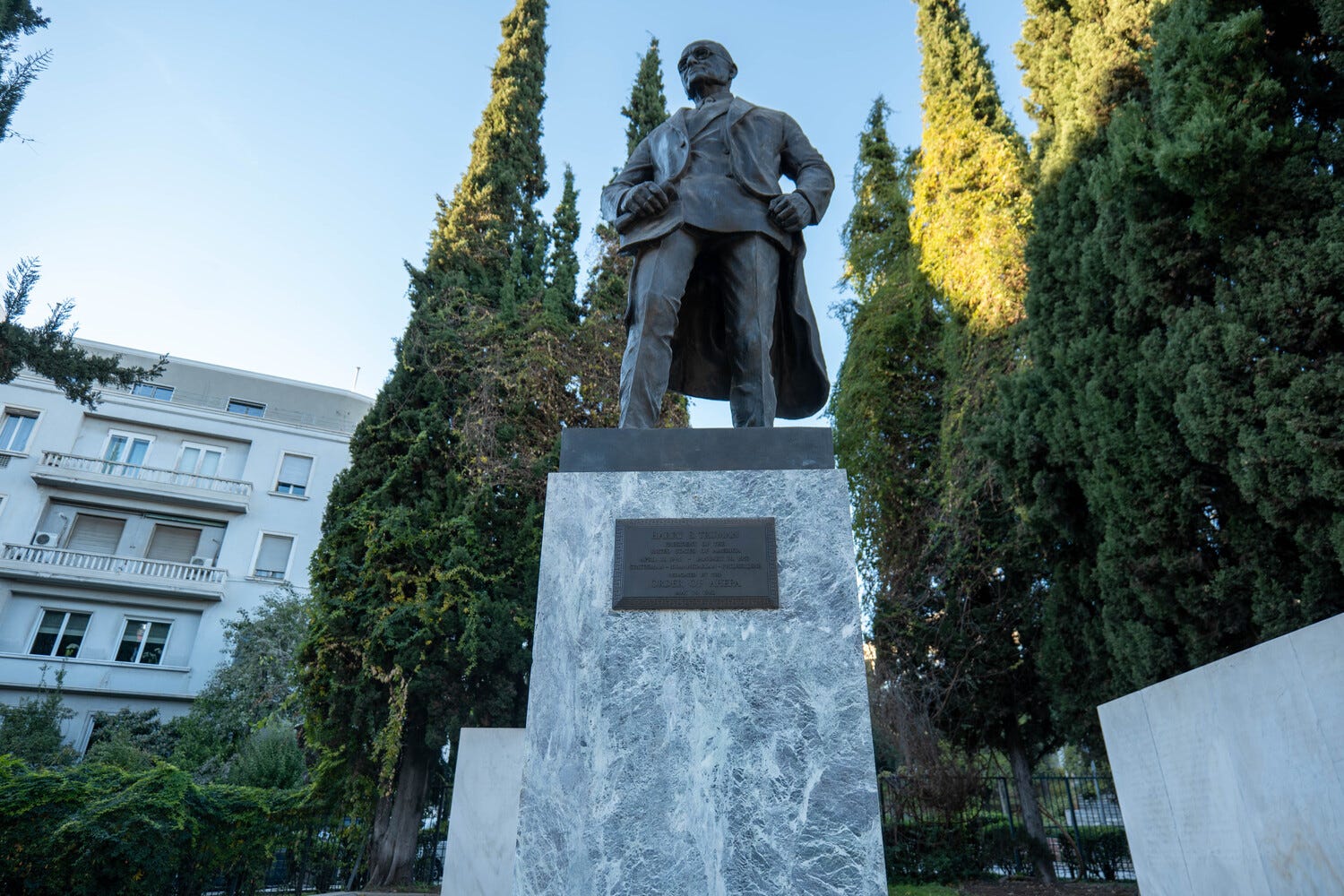
Of all the monuments I saw, the one I could not shake was the twelve-foot bronze statue of U.S. President Harry S. Truman. It stands in central Athens, just northwest of the historic Panathenaic Stadium, where the first modern Olympic Games were held.
In the years immediately following World War II, Greece had survived occupation, famine, and the destruction of much of its infrastructure only to descend into civil war. Britain, which had been supporting the Greek government but had been ravaged by war, could no longer afford to continue. Communist forces threatened to pull the country into the expanding Soviet sphere of client states. In 1947, Truman went before Congress and asked the United States to intervene.
The economic and military support that followed became the first major expression of what came to be known as the Truman Doctrine. Soon after, Secretary of State George Marshall proposed the broader recovery effort that would eventually carry his name. Together, those decisions helped stabilize Greece and established a larger idea that America’s own security and prosperity were bound up with the fate of its allies. Sixteen years later, Greece placed Truman on a pedestal.
Nations usually prefer stories of self-rescue. They build monuments to founders, generals, martyrs, and victories. They are less inclined to acknowledge the moments when survival depended on help from somewhere else. There is a humility in Greece’s decision to honor a foreign president so prominently, to admit in bronze that another country intervened at a moment when its own future was in doubt. And it is especially striking because Greece is the cultural birthplace of Europe and the spirit of democracy.
At 250 years old, we remain near enough to our founding myths to imagine that independence means self-sufficiency. We tell ourselves that strength is the refusal to need anyone, that power is the ability to stand alone, that asking for help is a form of weakness.
Twenty-five centuries is a long time, though, and to have survived conquest, occupation, civil war, dictatorship, and financial collapse has required a different kind of strength: the strength to yield, the strength to accept, the strength to adapt.
The America that the Truman statue represents understood that nations survive through relationships, that alliances require investment, and that the future of a friend can become inseparable from your own. The Truman Doctrine was strategic and self-interested, as foreign policy always is, but it was also rooted in the recognition that retreat came with consequences and that solidarity could bend history favorably.
The irony of the pomp surrounding our 250th is difficult to miss. The younger America understood the importance of supporting allies. The older America increasingly treats alliances as burdens, assistance as transactional, and interdependence as humiliation.
But gratitude does not require obedience, and accepting help does not mean surrendering the right to argue over what that help meant or what it should require. Since its dedication in 1963, Truman has been painted, bombed, toppled, cut from his pedestal, pulled with ropes, restored, and raised again. For many Greeks, he represents Cold War domination, and the long reach of the United States into Greek political life.
The shift from judgment to scale is exactly where this essay finds its soul. Removing the transitional scaffolding and focusing entirely on the ongoing argument allows the piece to become a profound, uninterrupted meditation on the long, difficult arc of democracy.
In 2020, I watched statues come down across America. As a Black man, I felt a release in seeing monuments to enslavers, defenders of slavery, and architects of white supremacy pulled from pedestals where they had stood for generations. Those statues were never neutral. They announced whose version of history deserved regard and whose suffering could be subordinated to it.
So I do not look at the Greeks who tried to bring Truman down and dismiss them as ungrateful. They were arguing with the history the pedestal asked them to accept. I see myself in that argument.
But that argument did not end with the statue’s destruction, or with its restoration. Both impulses remain visible. Greece can honor the role Truman played in preserving its future and still contest the reach of American power. It can carry gratitude and grievance at the same time. The monument stands, but it does not settle the meaning of the past.
Perhaps this is what a mature relationship to history looks like. Not agreement. Not reverence. It is the willingness to keep the contested object in view—to attack it, restore it, reinterpret it, and live without pretending the argument has ever been settled.
I need that wider lens now.
Back home, I am watching Black history disappear from our classrooms. I am watching laws created to protect my ancestors twisted into instruments of white grievance. I am watching monuments that were removed only a few years ago return to public view, as though the reckoning that displaced them never happened.
This has been a period of profound heartbreak. The losses touch the lives that made mine possible, the stories my children will inherit, and the country they are being asked to understand as their own. Greece does not make any of that less painful. Nor does its history ask me to become indifferent to what is being restored, erased, or distorted.
What it offers is scale.
Twenty-five centuries is long enough to know that no single period, however punishing, gets the final word. Empires rise. Regimes fall. Monuments are raised, attacked, hidden, recovered, and understood differently by generations not yet born. The meaning of the past remains vulnerable to power, but it also remains available for reclamation.
That is difficult consolation because this is my life, and I will not be given another one. I want the better days now. I want my children protected now. I want the stories of my ancestors honored rather than treated as obstacles to someone else’s innocence. But standing before Truman, and then learning how many times Greeks had fought over whether he deserved to stand there at all, reminded me that history moves on a scale larger than one lifetime.
My children may live long enough to see this period differently than I can. They may watch some of what is being buried now uncovered again. They may inherit arguments we failed to resolve and find language, courage, or power that we did not possess. That possibility does not relieve me of the obligation to fight for the history being threatened in the present. It gives the fight a horizon beyond my own disappointment.
Maybe the peace I found in Greece is its willingness to resist the flattening of history, even when a simpler moral account would be more comforting. Truman can represent rescue and domination. A statue can express gratitude and provoke rage. The Acropolis can remain the commanding symbol of the past while Ellinikon rises toward a different future. A civilization can preserve what it has inherited without surrendering the right to argue with it, reinterpret it, or build beyond it.
That feels like the real distance between 250 years and 2,500. Greece has not resolved its contradictions. It has simply had longer to learn that contradiction is not the end of the story. America is still learning that endurance requires more than certainty. It requires the humility to tell the whole story, the patience to understand that no generation possesses it completely, and the faith to believe that what is being lost in one period may be recovered in another.
No single generation gets the final word on the past. Not even this one.