Making New Memories
On Birthdays, Books, Time, and Staying in the Game

Turning fifty last year felt ceremonial. It felt like a threshold. I took stock in a way I hadn’t before. I felt gratitude, relief, even a quiet pride at having made it through seasons that once felt uncertain. There was something definitive about it.
This year arrives with a strange feeling. It’s almost as if some small part of me expected that turning fifty would pause time — that once you cross a milestone like that, aging becomes symbolic rather than literal.
But here I am again. Another year. Another turn. Time continuing its steady work.
Milestone birthdays can trick us into thinking we’ve arrived somewhere permanent. And maybe that’s why so many of us choose to ignore or downplay them — they all keep coming, so what’s the point of celebrating one over another?
Still, I’ve come to believe we have the agency to create meaning where we want it. And this year, on this birthday, I’m choosing to mark something specific.
Thirty years ago, I saw my name in print for the first time.
Twenty years ago, my first book was published by a major house.
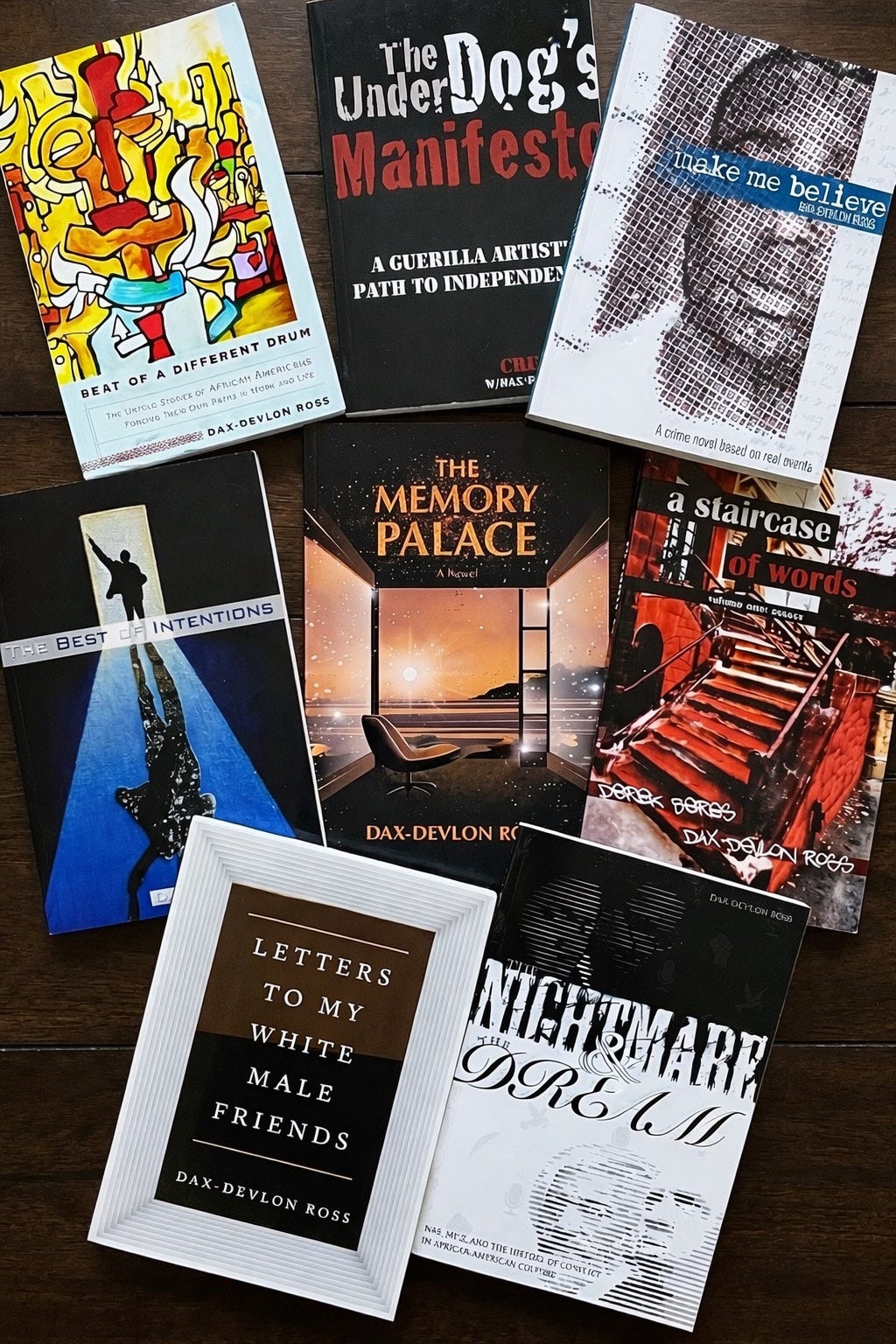
And today — on my birthday — I am publishing book number eight.
But we will get to that.
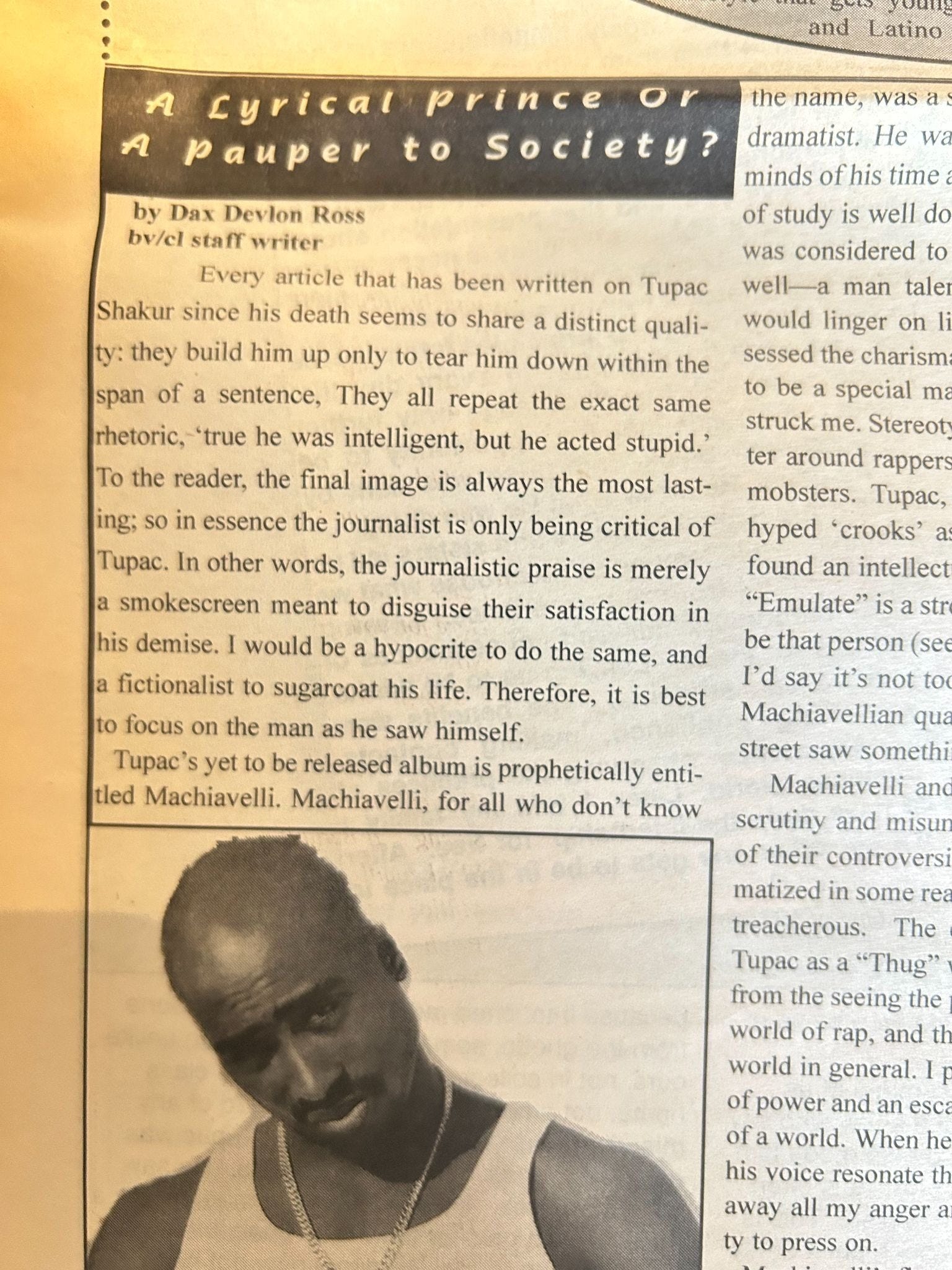
I still remember the night Tupac died. It poured and thundered all night long. I went into my small office space in the loft I inhabited at the time and sat down at my Brother word processor — the one with the small glowing screen and the hum of the ribbon — and I started writing. I didn’t outline. I didn’t think about publication. I just wrote because it felt urgent. Necessary. Like something had to move through me.
When I was done, I called my friend Darryl. At the time, he was the writer among us. He already had a column in the official school paper, The Daily Targum. To me, that made him legit. I asked him to read what I’d written.
He came right over and sat down in the small room. I left him alone to read. When he emerged, he just looked at me and said that he loved it. Darryl took it to our friends Robyn and Butterfly — yes, that was her name, very nineties, very Gen X — who were the editors of the Black Voice/Carta Latina newspaper on campus.
Robyn lived in that office. She cared about young writers in a way that felt almost maternal. She said yes. She gave me notes. Real notes. She treated me like someone who might grow into the work. And then she published the story, which, thanks to my dear mother’s meticulous collection of everything I’ve written, I still have.
Within a month, I had landed a cover story.
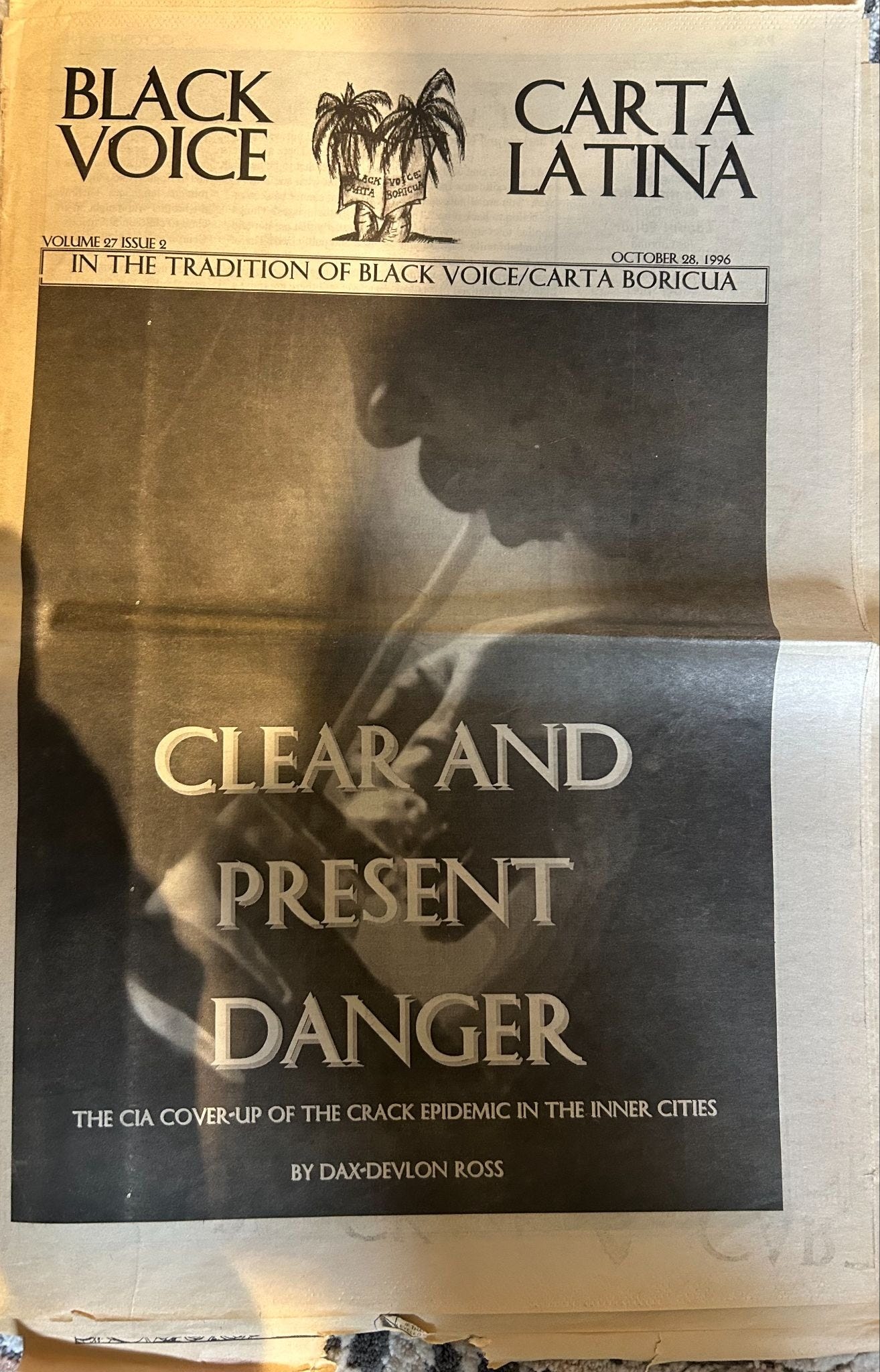
It was about Gary Webb’s “Dark Alliance” series in the San Jose Mercury News — the explosive investigative reporting that connected the CIA to the crack epidemic. I was stunned by that reporting. I was stunned by its courage. And later, I was stunned by what happened to Webb, who was discredited, isolated, and eventually took his own life.
But at that moment, as a junior in college, I was simply astonished that something I wrote had a byline. That my name appeared in print. It felt enormous. The following year, I got a column in the Daily Targum, Rutgers University’s main paper. I was hooked.
I was a year or two out of law school and still tepidly pursuing a writing life when, standing in a bookstore reading another title, the entire concept for what would be my first book appeared fully formed. Beat of a Different Drum was my attempt to understand what it meant to live a meaningful Black life outside conventional scripts.
I traveled across the country interviewing Black artists, entrepreneurs, wanderers — people who had stepped outside tradition and made lives on their own terms. Later, I went to London, then to Paris, where someone offered me a flat for two weeks, free of charge. I lived there cheaply, walking the streets, meeting Black expats who had built lives abroad. They spoke about distance, exile, breathing differently outside America. I remember sitting in cafés thinking, I am living my dream.
The book came out the year after my father died.
He had been my first steady audience. He didn’t teach me craft. He simply believed I could do whatever I wanted. He treated my thoughts as worth listening to. That gift mattered more than any technical training.
A few months after the book’s release, I received a call from my agent. It was a bright June afternoon in Washington. I had just stepped out of a high school auditorium after giving a keynote. The sun was sharp.
The book hadn’t sold quickly enough, he said. The publisher would not be picking up the option for a second book. I wasn’t surprised. There had been signs. The book was released as a paperback original. No hardcover. It moved through junior editors — two left the imprint in quick succession for better roles elsewhere, and the third was younger than me and simply wasn’t seasoned enough to give the book the guidance it probably needed.
Standing in the sun that afternoon, I felt ashamed more than angry. I had blown it.
It would be fifteen years before another major publisher gave me another chance.
In between, I kept writing.
Derek Beres — one of the closest friends of my life and a fellow writer, whose work over at Re:Frame is essential reading in these times — lived downstairs from me in Jersey City. After the disappointment of Beat, I took some of the remaining advance and used it to start Outside the Box Publishing.
We ran it out of our apartments. Manuscripts moved up and down the stairs between our floors. Covers were laid out on living room carpets. Boxes stacked by the door.
I had been watching rappers outside Fat Beats in the Village selling CDs hand-to-hand. Most people brushed past them. Some rejected them outright. But they kept showing up. They introduced themselves. They owned their work.
So we did the same.
On Saturdays, we set up a folding table near Irving Plaza. We placed our books down and committed to staying. People walked past without seeing us. Some stopped, asked questions, left. Some bought.
You learn something standing behind a table with your name on a cover. You learn that rejection does not end you. You learn that belief must outlast indifference.
During those years came:
The Underdog’s Manifesto, created with my friend Creature — a book about hunger and artistic survival.
A Staircase of Words, written with Derek — essays ranging from irreverent to reflective, including a mushroom-fueled walk from Inwood to the Battery long before psychedelics were fashionable.
The Best of Intentions, a Bildungsroman born from grief — my father’s death, the unraveling of a marriage, the inheritance passed between young men.
The Nightmare and The Dream, written in the top floor of a Fort Greene brownstone a friend lent me for $50 a week — tracing Nas and Jay-Z back through Frederick Douglass, Alexander Crummell, and Martin Delany, situating hip-hop conflict inside a long lineage of Black intellectual argument.
Make Me Believe, born from an encounter with a young man on death row whose story would not leave me alone.
Each book was a question I was trying to live through.
Then the pandemic arrived.
That summer — 2020 — I wrote Letters to My White Male Friends. I moved back to Washington in the fall and finished the book in our new house. I typed the final pages the night we learned Joe Biden would be the next president. There was something fitting about that: a book about difficult, necessary conversation completed on a night the country finally exhaled.
Fifteen years after my first major-house publication, Letters was released by another major publisher. It felt like a second beginning.
The book asked something of its target audience — empathy, courage, difficult conversation. The title unsettled some readers before they turned a page. Once again, the editor who’d bought the book and shepherded it through left the house, this time shortly after publication. And once again, the numbers were not strong enough to justify continuation.
There have been seasons when I’ve wondered why the work hasn’t traveled further. It would be dishonest to pretend I’ve never asked. But I’ve come to understand that scale and significance are not always aligned.
Still, disappointment rarely arrives alone. It carries you somewhere.
For me, that somewhere was home.
Being back in D.C. after more than two decades in and around New York City was a balm. The world had contracted, and somehow that made people more available. Small gatherings. Neighbors on porches. Friends who suddenly had nowhere else to be. I had imagined that returning home would restore something organic in my friendships, and for a while, it seemed to be working.
Then the world reopened. And the closeness didn’t hold.
By 2023, I found myself unexpectedly hungry for the kind of male friendship that had once felt effortless — long walks, unscripted conversations, drop-ins that required no scheduling.
I began reading essays about middle-aged men and friendship. About pride disguised as self-sufficiency. And I had to ask myself where I had retreated. Where I had failed to show up. How much of my loneliness I had quietly helped construct.
I kept writing, though in this phase strictly to and for myself.
At the same time, I was thinking about memory.
In recent years, I’ve come to understand how unstable memory actually is. We misremember. We invent. We smooth over. We protect ourselves. The mind is not a vault; it is a storyteller. And the story changes as we change.
Who we were at thirty is not who we are at fifty. The meaning of events shifts. Regret reframes itself.
What would happen, I wondered, if technology allowed us not just to record memory but to transfer it? To experience someone else’s recollection as sensation? What would that do to friendship?
Those questions became The Memory Palace.
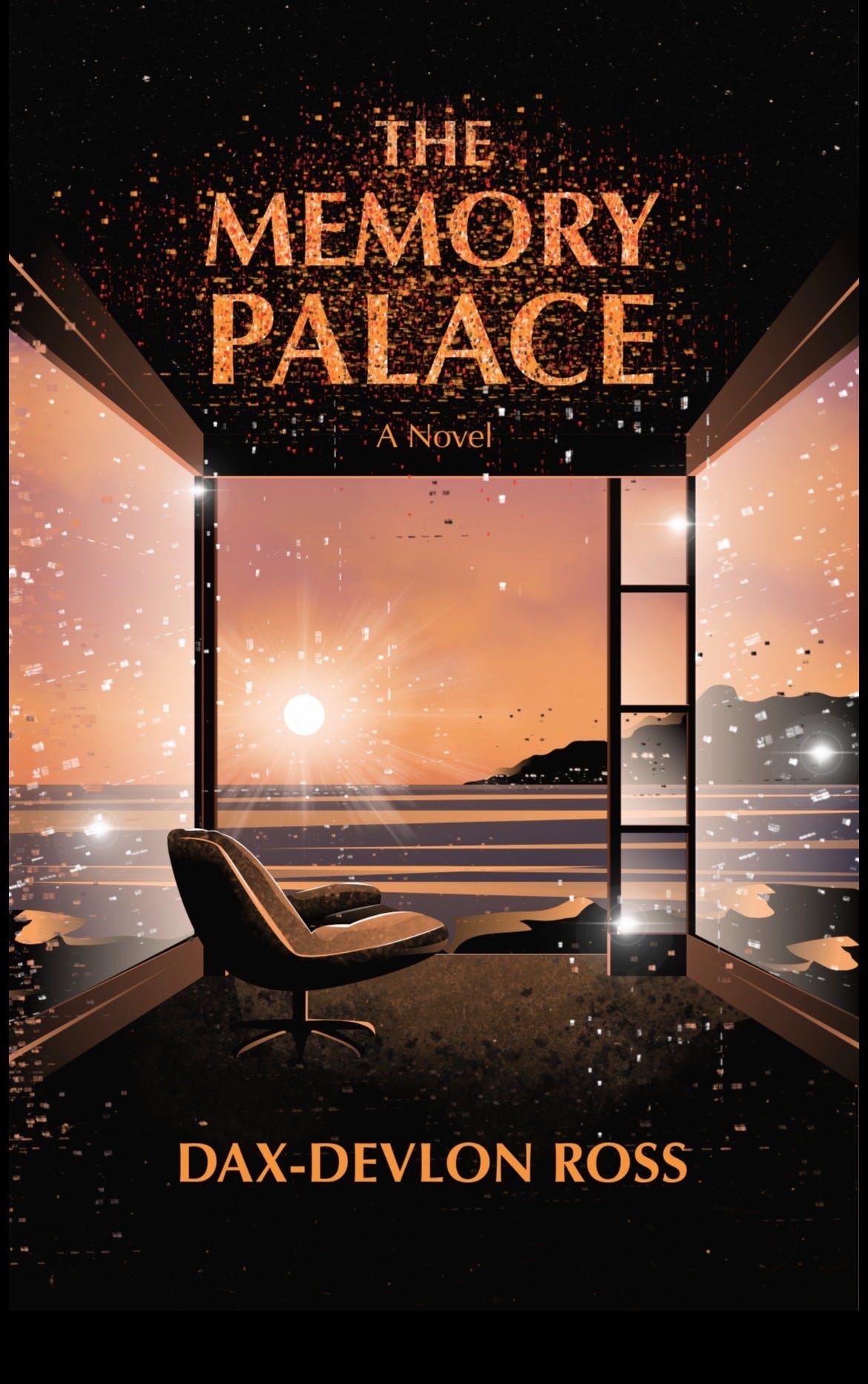
Set in 2066, the novel follows aging friends in a society that has survived catastrophe but has not yet decided what it is becoming. A breakthrough allows memories to be transferred and shared.
At first, the technology promises understanding. But as one character experiences another’s memory of a pivotal moment, the past rearranges itself:
“He had always believed the memory was his alone — a small room, late afternoon light, the air thick before the argument began. But when the transfer finished and he felt it from the other side, the room shifted. What he had remembered as restraint registered now as absence. What he had called dignity looked, from within her memory, like withdrawal. The past was not something he possessed. It was something he had been narrating.”
The book wrestles with what happens when the private revisions we’ve made over decades become testable. It asks whether technology can deepen intimacy — or simply expose how much we rely on our own version of events.
At its core, it is about friendship. About masculinity without performance. About a world rebuilding after trauma and unsure what it needs to become.
Fittingly, the push to write it came from lunch with a friend. I told him the idea expecting polite curiosity. He leaned back, smiled, and said simply, “That’s brilliant.”
That sentence reminded me how powerful belief can be when offered without hesitation. It reminded me of Darryl and Robyn and Butterfly and my agent, Byrd, and so many others who’ve given me belief in times I really needed it.
With that simple nudge from a trusted friend, I started writing the book in shafts of time after the kids went down. Once I acknowledged that I was really doing this, I knew something else too: I did not want this to be sprawling.
As a reader, I have always been drawn to lean novels that are clear about what they are trying to say. They are often unapologetic vehicles for an idea or allegories. They don’t wander. They don’t hedge. They trust the weight of the thing they are carrying.
For years, Albert Camus was my absolute favorite writer. The Stranger. The Fall. Short, elegant, understated, devastating. Some of Hemingway’s best work moves the same way. Steinbeck’s Of Mice and Men. Toni Morrison’s The Bluest Eye. Baldwin’s Giovanni’s Room. Kafka’s intensity in A Hunger Artist and Metamorphosis. Coetzee’s restraint in Disgrace. These are books that compress enormous moral and philosophical weight into small spaces.
When I was younger, I thought my preference for brevity was a weakness. Now I understand it as taste. In this season of life, brevity feels honest. So The Memory Palace is spare by design. It is focused in its commitment to its central question.
And when I finished a draft I felt good about, I set up the imprint, designed a logo bought a batch of ISBN numbers, hired a proofreader, then designers, and finally found distributors. Three weeks ago, I flew out to Portland to visit Derek and Callan, his partner and an incredible host. For two days, in between hearty meals and dog walks with their pup Tempo, I holed up in Derek’s office recording the audiobook.
In many ways, First Draft Books is an extension of what Derek and I learned twenty years ago running Outside the Box Publishing out of our Jersey City apartments — manuscripts moving up and down the stairs, books sold hand-to-hand on the street. We always had ideas. Now we have better tools, deeper relationships, wider networks. We do not need to wait for approval.

If there is anything I understand more clearly at this stage of life, it is that continuation matters more than arrival — that putting things out into the world makes more sense than waiting for the perfect moment.
Thirty years since my first byline. Twenty years since my first book.
Still learning. Still revising. Still trying to say something honest.
If you’ve been reading here — whether for months or weeks, or this is your first time — thank you. Truly. This space has allowed me to think out loud, to try ideas before they are fully formed, to risk being unfinished in public.
My intent with this space is to put what’s on my mind onto the page and simply share it. At times, I may invite you to make an offering — to support the work if you’re inclined, if you’re interested, if it speaks to you. No pressure whatsoever. The writing will keep moving either way.
If you’re curious about what happens when memory itself becomes negotiable, when friendship is tested not by time but by truth, I hope you’ll read The Memory Palace.
It is available everywhere in print and as an e-book, and soon as an audiobook, wherever books are sold. If you’d like a preview, you can visit Indigo
The Memory Palace is dedicated to my friends — the ones I have and the ones I have yet to meet. Publishing it on my birthday feels like making a memory on purpose.
Happy birthday to me.
And happy birthday to Toni Morrison and Audre Lorde — my birthday twins. Toni would have been 95 today. Audre, 92. I certainly don’t claim their stature. But I do claim the calling. If I had ever met them, I believe we would have recognized one another.
Some friendships are made across time. Some callings are, too.
Happy birthday to them.