
Blood Magic
Jesse Jackson, Barack Obama, and the Question of Inheritance

Author’s Note: I’m trying a thing today—I recorded an audio version. It was fun and I’ll do more. You can find it below:
I woke up this morning and learned that Jesse Jackson has died. Eighty-four years old.
The first thing that returned to me was not a speech, not a campaign rally, not even 1984. It was a bathroom at Reagan National Airport three or four years ago.
I was washing my hands when I looked up into the mirror and saw a man in a wheelchair behind me, an attendant standing quietly at his side. For a moment he was simply familiar in that way someone is familiar when you have known their face your entire life but have never quite stood near their body. Then it clicked. It was Jesse.
I tried to find his eyes in the mirror. I failed. We failed.
I don’t know whether he was lucid that day. I don’t know what his interior life was in that moment. But the man I saw felt distant, almost absent. Not gone — just not fully there. And I remember leaving quickly. I did not want to linger. Did not want to watch the attendant help him. Did not want to witness, in that fluorescent airport light, a figure who once loomed so large, so prophetic, so certain, now stooped and quiet and dependent.
There is something deeply unsettling about watching your heroes outlive their myth.
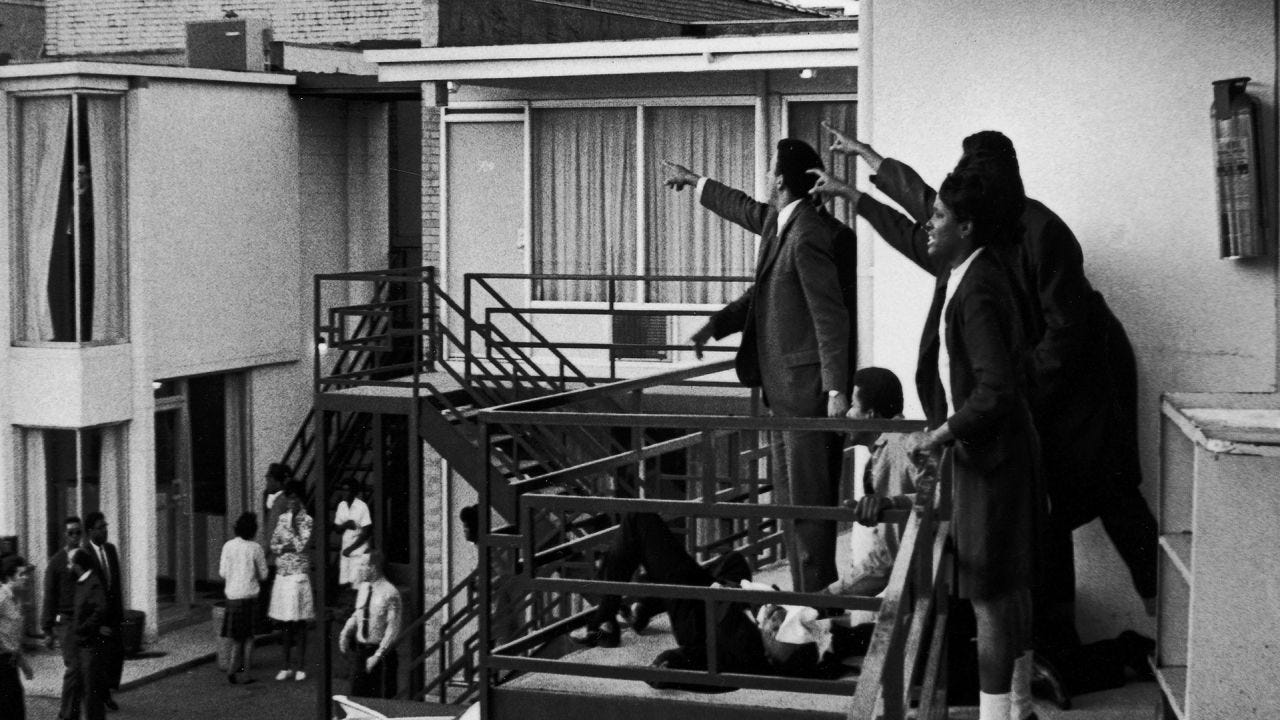
Years ago, in The Nightmare and the Dream, I wrote about Jesse at length. This morning, almost without thinking, I pulled the book down from the shelf and began flipping. I found myself drawn back to the section about the immediate aftermath of Dr. King’s assassination in Memphis. That balcony. That shot across the parking lot. That image that has become one of the most indelible metaphors in American life. It lives in our cultural synapses. It lives in film, in music, in memory.
And it was there, in that rupture, that Jesse’s story took on a different kind of force.
I wrote then:
“What exactly happened and precisely where Jackson was standing when King was shot is still uncertain, but what we know for sure is that the next morning he appeared on The Today Show wearing an olive green turtleneck stained with blood—King’s blood. He would later appear in the same turtleneck at a Chicago memorial. There he took the podium and declared, ‘I come here with a heavy heart because on my chest is the stain of blood from Dr. King’s head… He went through literally a crucifixion. I was there. And I’ll be there for the resurrection.’”
Even now, rereading those lines, I feel the same chill I felt when I first encountered the story.
I continued:
“In other reports Jesse said he had held King’s head. Meanwhile, King’s other aides believed Jesse was taking the opportunity to situate himself. At least two recalled seeing Jesse touching or placing his palms in the pool of blood and wiping it on his shirt. As eerie as the act seems, Andrew Young explained it on spiritual and religious grounds: according to Young, Baptists believe there is power in blood that can be transferred from one believer to another. King’s death, in his mind and in the hearts and minds of millions, left a void. Someone had to fill that void. Someone capable of filling that void had to step in and take responsibility for the movement. Jesse understood this.”
That idea — power in blood that can be transferred — has always unsettled me.
It suggests something sacramental. Mystical. A theology of succession enacted in public view. Authority passed not by ballot or by appointment, but by proximity to martyrdom.
Was it ambition? Instinct? Faith? Self-creation in the crucible of history?
I tried, even then, to be fair. I wrote:
“As maligned as he was for his conduct following King’s death, what those critics were truly disparaging wasn’t Jesse himself, but his methods. Despite what anyone might say about him, he did in fact become black America’s prime mover and shaker after King’s death.”
That remains true.
It is impossible to tell the story of modern Black politics without him. He widened the lane. He ran when running seemed symbolic at best and futile at worst. He forced the question of Black executive power into a system that had never fully entertained it.
And yet I cannot shake that image in the mirror.
There is a strange and uncomfortable pattern in the way our giants age. I have spent years buried in the life of Paul Robeson, who died in relative obscurity after decades of exile and surveillance. Du Bois died in Ghana on the eve of the March on Washington, his passing nearly swallowed by the grandeur of the moment he helped midwife. Others live long enough to watch their myth fray, their influence recede, their bodies betray them.
There is something particularly unforgiving about aging in public while Black, about outliving the era that made you indispensable.
And then there is Grant Park.
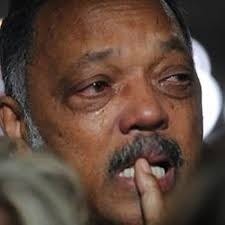
I remember watching Jesse in 2008 as Barack Obama claimed the presidency. Cameras found him in the crowd, tears streaming down his face. They were not theatrical tears. They were not defiant. They were wet, unguarded, human.
In that moment, whatever else one might say about the blood, about the ambition, about the myth-making, it was clear that he had believed. He had believed in a horizon that did not yet exist. He had imagined a future that would require him not to be the culmination, but the bridge.
If there was transference in Memphis, there was another in Grant Park.
Not mystical. Not sacramental. But political. Generational.
What strikes me now is the symmetry.
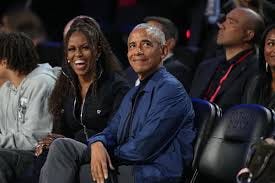
Barack Obama (and, of course, his better half), sitting courtside at the All-Star Game this weekend, is roughly the same age Jesse was that night in Grant Park eighteen years ago.
In 2008, Jesse stood in the crowd at sixty-six, watching a younger man step into the space he had once strained toward. His tears carried vindication and perhaps something else: the recognition that history had moved beyond him.
There is something quietly tragic in what followed.
In the era of the first Black president, there was never a clearly defined public role for the man who had once made that presidency imaginable. I do not know the inner workings of those decisions. I understand there were political complexities, generational tensions, competing visions of leadership. But from a distance, it always felt like something was missing — as if breakthrough required a certain distancing from the very lineage that produced it.
Cornel West would later crucify Obama for what he saw as a failure to fully embrace Black leadership while in office. Others accused Obama of being too partisan toward his own people. The paradox is telling. He was, to some, insufficiently Black in governance; to others, dangerously aligned with Black grievance. That is the knife’s edge one walks when breaking through.
We are not always permitted to honor our forerunners in public without risking something vital. Sometimes the price of entry into America’s center is a kind of selective amnesia. A softening of origin. A quiet narrowing of lineage so the broader nation can feel at ease.
Listening to Obama now — in his recent conversation with Brian Tyler Cohen — I hear a different approach to succession. He speaks not of destiny, not of inheritance, but of responsibility. He talks about building institutions that cultivate younger leaders. About empowering people in their 20s and 30s to reshape the system. About lifting others up rather than reclaiming the center.
There is no mysticism in it. No appeal to spiritual transfer. No symbolic grasping. It is pragmatic. Structural. Material.
If Jesse’s generation often leaned into the theology of movement — prophecy, sacrifice, resurrection — Obama has always seemed more grounded in the mechanics of power. He understands myth, but he does not inhabit it the same way. He synthesizes the spiritual history of the movement without overindulging it. He keeps his footing in the material world.
Present, but not possessive. Engaged, but not grasping.
It feels like a conscious transfer of power — through design rather than proximity to blood. Through mentorship. Through stepping back at the appropriate moment.
King was not the end. Jesse was not the end. Obama is not the end. They were each and all bridges.
And perhaps the truest measure of a bridge is not simply whether it allows others to cross, but whether it remembers what came before it — even when remembering is inconvenient.
I still see Jesse in the mirror. I still see him in Grant Park.
And now I see Obama courtside, aware that his season has changed, steady in his place within it. Perhaps in him we may finally witness something we have too rarely seen among our giants: not just greatness in ascent, but grace in succession — and maybe, this time, a fuller reckoning with the lineage that made that ascent possible.
That, too, is a kind of inheritance