
An End of Year Interview

I’m writing this from my basement, the morning after Christmas, drinking coffee quietly, trying not to make too much noise in case the kids hear me and come bounding down the stairs.
These are the little crevices of freedom I get now. People do all sorts of things in these crevices. This morning, I’m watching Cover-Up, a Netflix documentary about Seymour Hersh.
Hersh became something like a hero of mine after reading his Abu Ghraib prison exposé in the New Yorker way back in 2004. I remember thinking at the time: What a courageous soul. What an incredibly good American.
The documentary lingers on his archives—boxes and boxes of notes, drafts, clippings, correspondence. At one point it’s just him, older now, sitting among the physical record of a life spent telling stories powerful people would have preferred remain buried.
This is the kind of thing I do in my free time. I’m interested in the discipline and relentlessness it takes to put things on record when the stakes are high and silence is the easier path.
My first encounter with Hersh came long before I ever engaged in investigative journalism myself, and of course I’ve never reached anything close to what he has reached. But even then, I understood there is a kind of duty attached to telling certain stories despite those in power preferring silence and compliance.
I like to believe that, in my own way, I’ve tried to be part of that broader tradition: challenging power, uncovering uncomfortable truths, and doing it in a voice that is unmistakably my own.
Which brings me here.
It’s been two days since the final bonus episodes of Crying Wolf were released. These two episodes—The Case of Anthony Garrett—focus on a man convicted of murdering seven-year-old Dantrell Davis in Chicago in 1992 and his three-and-a-half-decade fight to prove his innocence.
Across the two episodes, I look back at Anthony’s life through the eyes of people who knew him—his family, his community—and through his own voice, after interviewing him several times from prison. The reporting involved deep archival reconstruction: old case files, court records, contemporaneous news coverage, and details that had never really been examined together in one place. I also spoke with others whose connection to the case—and to the detective at its center—only fully reveals itself if you listen.
There’s a real sense of completion in releasing these episodes in particular. I’m officially closing the loop on a project I spent the past year working on.
And here’s where I want to be more candid than I’ve been.
This was a twelve-part true-crime series. It involved extensive reporting, archival research, interviews, travel, and the work of deeply talented people. It took real time. Real care. Real craft.
And if I’m honest, watching it receive almost no attention has been disheartening.
I didn’t expect fame. I knew this wasn’t the kind of project that would go viral. But at a certain point, you can’t help but wonder about the relationship between effort and response—between seriousness and reception.
There’s a quiet why bother that creeps in when you put something into the world that you know is excellent—unquestionably high-quality, carefully made—and the world more or less shrugs. Especially when, at the same time, you watch enormous energy flow toward things that feel disposable, circular, or already exhausted.
I say all of this, and believe me it’s taken a lot to even allow myself to express this at all, because attention is a form of values. Where we choose to look, linger, press like, and affirm says something about the world we’re building together. And sometimes it’s hard not to feel like careful, demanding work—especially work about Black life, Black harm, and Black truth—simply doesn’t register right now unless it arrives packaged as spectacle.
I don’t seek applause. But I do believe in encouragement. And I think it’s fair to say that when serious work meets silence, it takes a toll, even when you understand the reasons.
So yeah, that part hurt a little.
There’s another piece of this I need to own more clearly.
I’m not active on social media. I don’t post on Instagram. I don’t post on X. I don’t post on Bluesky. I don’t make videos. I don’t document my process. I don’t even tell most people what I’m working on. I talk a little on LinkedIn, but even there I’m not particularly consistent or promotional.
Some of that is age. Some of it is temperament. And some of it is a deep discomfort with the way attention now seems to be the price of entry for everything—the constant need for validation, the applause-seeking, the sense that if you don’t announce, perform, and optimize every move, it doesn’t count. And when an audience does arrive, it’s quickly converted into a profit center, preferably a recurring one.
That’s just not me.
What I am looking for is seriousness. I try to put in the work to earn that. Crying Wolf is not a small project. I was one part of a much larger machine, and one of the hardest moments this fall was having quiet, painful conversations with one of my producers who was genuinely heartbroken watching the show slide down the charts.
I am sharing (oversharing?) this moment because it forced me to confront something I’ve always half-believed: that good work should be rewarded simply for being good.
I know that’s a fantasy.
And yet I also know that I’m not comfortable becoming someone who has to ask for attention constantly in a world where there is already so much urgent need—so many things that should be looked at, listened to, grappled with seriously.
There’s a mismatch there. Between how I work and how attention now works. Between depth and virality.
I find myself genuinely fascinated—and troubled—by what virality signals about our values. About what we choose to focus our devices on. About what we take for impact. We are all creators now, but I worry we are also entertaining each other to death. I think often about Neil Postman’s Amusing Ourselves to Death—written in 1985, before the internet as we know it existed—and I wonder what a modern sequel would look like. Not amusing ourselves to death, but creating ourselves to death. Performing ourselves to death. With so many channels, so much content, so much constant production, I sometimes wonder who the audience actually is. How anyone is meant to sit still long enough to truly take something in if everyone is always creating, posting, optimizing. It can feel like we’re caught in a loop—consuming one another endlessly, mistaking motion for meaning, and calling it engagement.
Naming that doesn’t absolve me of the choices I’ve made. It just helps me understand the terrain more honestly. And beneath my candor—if I’m really honest—there’s also a yearning to be taken seriously.
There is nothing quite like the experience of putting careful work into the world and having it met with stone-cold silence. Silence is harder than criticism. When there’s no public engagement at all—as has been the case to date with Crying Wolf—it makes me wonder whether I’m out of touch, whether my sentences land oddly, whether my voice grates, whether my arguments or framing fail to compel, or whether the subjects I keep returning to have simply drifted outside the circle of concern. I watch other people’s ideas circulate—debated, taken apart, sharpened through friction. Even when the response is critical, there is recognition in that exchange, an acknowledgment that the work is worth grappling with. What’s hardest is not disagreement; it’s not being engaged at all.
What I’ve come to realize, though, is that I can’t wait for other people to take me seriously. I have to do that myself.
So in that spirit, for my final post of the year, I’m interviewing myself about Crying Wolf—and especially the bonus episodes. These episodes stretched me. They scared me. They changed how I think about my work.
An Interview With Myself
On Crying Wolf, the Bonus Episodes, and the Work of Bearing Witness
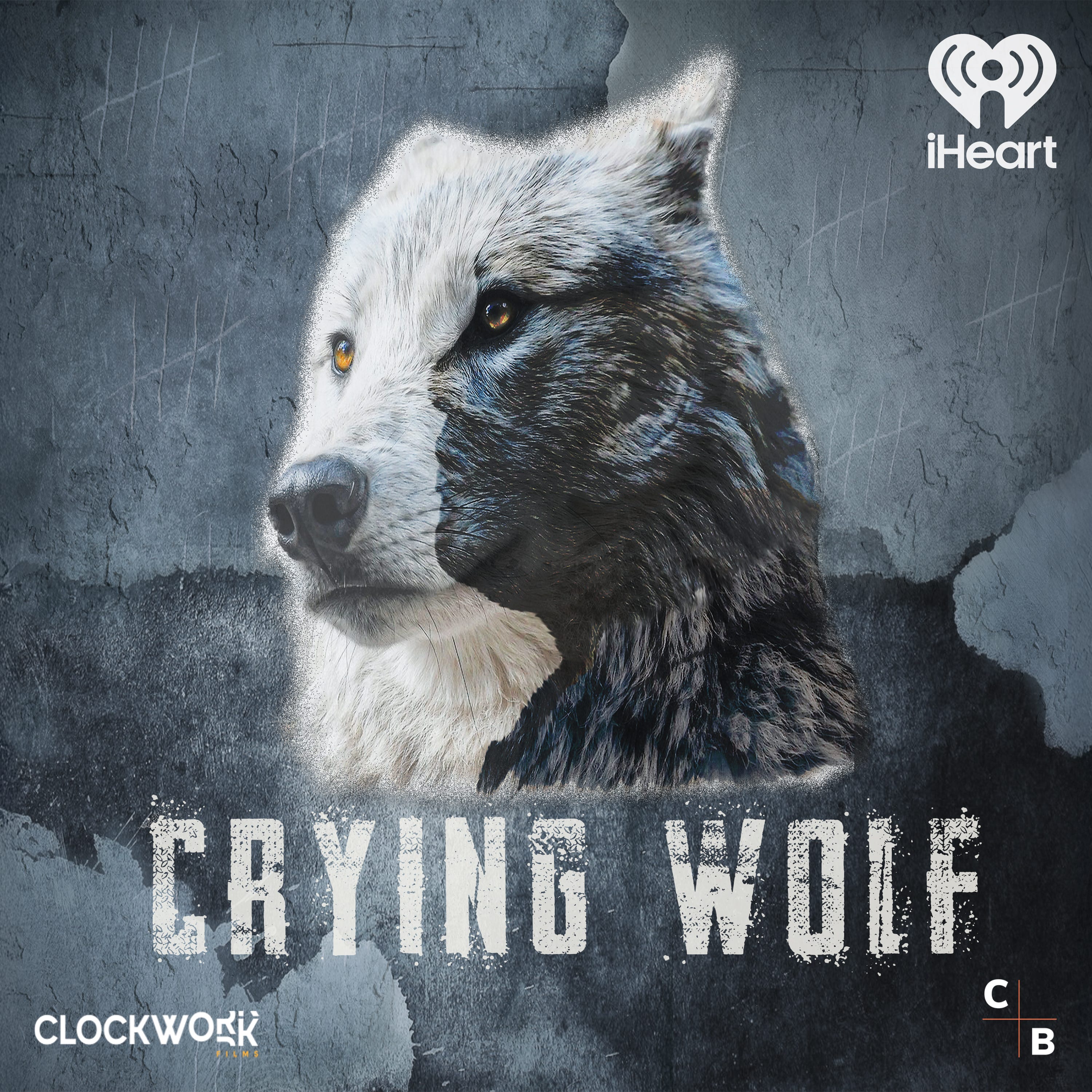
Let’s start simply. Tell me about the bonus episodes. What were they for you?
They were my first opportunity to produce.
I’d hosted podcasts, written them, reported them—but I had never produced before. I’d never been responsible for the full architecture of a story: the pacing, the sound, the emotional arc, the decisions about what breathes and what doesn’t.
At first, it was daunting. Genuinely intimidating. Writing for audio is different than writing for print. You have to think about rhythm, silence, tone—where the listener is going to get tired or lost or lean in.
And then, somewhere along the way, I realized that stories are stories. The medium shifts, but the discipline doesn’t.
Once that clicked, it became exhilarating.
Why did you feel compelled to tell Anthony Garrett’s story, especially given what the conviction involved?
I was deeply skeptical at first.
This was a story about a man convicted of murdering a seven-year-old boy. I have a child who is almost seven. I can’t imagine that kind of grief. That kind of loss. I don’t take that lightly—ever.
What changed things was reading his TIRC claim—his Torture Inquiry and Relief Commission petition. That’s when I realized this wasn’t just another man saying I didn’t do it. His innocence claim was something that had never actually been examined with seriousness.
And I felt a responsibility to do that.
You’ve said you don’t do these stories because of “public interest,” but because they’re the right thing to do. What does that mean in practice?
It means being honest about something we don’t like to admit.
We all live short lives. Brief blips in time. And some lives are treated as if they matter more than others.
Black lives—especially Black men’s lives—are routinely treated as insignificant unless they’re attached to spectacle. Our suffering is considered boring. Excessive. Too demanding.
So when I say “the right thing,” I mean telling the stories I feel ethically drawn to—stories that press on justice, on systems, on truths we insist are resolved when they’re not.
The bonus episodes are long, demanding, and unresolved. Did you feel pressure to make them more digestible?
No.
What’s striking is how we decide which stories are allowed to be demanding. People will spend endless hours on certain scandals and never call it too much.
But when the pain is Black pain, suddenly it needs to be softened.
I reject that.
People often ask why you keep returning to stories about incarcerated Black men. How do you understand that now?
Because we all get assigned our work.
These stories open themselves to me. These men trust me with their lives.
And I’m not naïve about my position. I’m a Black man with no criminal record, an advanced degree, a white-collar life. That awareness comes with obligation.
You’ve described this work as “putting things on record.” Why does the record matter so much to you?
Because we don’t live only for the present.
I spend a lot of time in archives. In records. In the residue of people who bothered to write things down when no one was listening.
Putting something on record means someone decades from now can find it.
What stayed with you most after finishing these bonus episodes?
Two things stay with me, and they’re inseparable.
The first is proximity—sitting with Anthony, hearing his voice, spending time with his family, feeling the cost of decades spent being disbelieved.
The second is that the story is still not finished.
The state’s willingness to allow Richard Zuley, the ex-detective at the heart of the series, to simply not show up to Anthony’s hearing last month—to again avoid reckoning—reveals that this is no longer about justice. It’s about avoidance.
And yet the story, and the testimony from Anthony’s first day in court in 30 years, is now on record. That matters more than attention ever will.
As you look toward 2026, what do you want to carry forward—and what are you ready to leave behind?
I want to carry momentum and freedom. The joy of writing again. The pleasure of getting lost in work. The sense that the outside world has finally fallen into perspective.
What I’m ready to leave behind is the armor.
I want to stay vulnerable. Curious. Experimental. I’ve found my voice in the studio now, and I want to keep pushing it.
2025 has been a hell of a year. That doesn’t need explanation.
I’ve never felt the need to log off like this year. I crawled to the finish line. And it’s never been harder to do so. I’m grateful, but I’m also ready for something fresh.
If you haven’t listened yet, or if you have a little time and want to step into the final episodes with fresh ears, I’m sharing the link here. You can find them wherever you get your podcasts.
I’m still in the basement now. The coffee’s gone cold. The house is starting to wake up. That crevice of freedom is closing.
See you in 2026.
This really moved me, Dax. Look forward to talking to you about it —and to Crying Wolf.