
America’s Forgotten Architect of Repression — and What He Teaches Us About Today’s Fear Regime
Joe McCarthy was the carnival barker. Pat McCarran stitched repression into law. To fight today’s authoritarian project, we need to pull the seams from every direction.

It’s not lost on me that lately I’ve been writing a lot about the anti-communist era of the early Cold War. Some of that is simply where my research and curiosity have taken me. Three years ago I started to feel we were headed in this direction—toward an extreme backlash against social justice. I won’t pretend that I could have imagined exactly what we’re experiencing now, but for me the headwinds were already in place in 2022. As a so-called practitioner of the DEI dark arts, I was already seeing gigs pulled, doors quietly close, universities and organizations become skittish. It was clear to me that January 6th had changed the dialogue. It was effective.
But I had never seriously explored how the anticommunists themselves operated until I started hearing pundits equating DEI with thought control. That’s when my ears perked up. Because when the people with the most power start claiming themselves as the real victims, it usually means they are laying the groundwork to justify repression — to flip the script so that silencing others looks like self-defense.
So I wondered: What tactics did they use back then? What alliances did they build? How were they able to convince the country that belief alone was a danger? How had they recast repression as patriotic?
The deeper figures like Christopher Rufo penetrated into the mainstream discourse, accusing people like me of laundering Marxism through DEI, the more I felt I needed to prepare myself for what was coming. This country suffers from chronic backlash—a condition that tends to flare up when racial justice, gender equality, labor rights, or immigrant inclusion seem within reach. Every period of progress for the most marginalized is followed by fierce eruptions of fear and resentment that seek to claw back whatever ground was gained.
So my interest in the early Cold War wasn’t an academic detour. It was an investigatory journey sparked by my own experience of professional and ideological chill. I was reading the articles, watching the headlines, and feeling the squeeze in my own work. That sent me back into a period of American history that has a lot to show us, if we bother to look closely.
We call it McCarthyism. The image is seared into memory: a senator waving a list, naming names, denouncing traitors. McCarthyism has become shorthand for demagoguery, blacklists, and witch hunts. But if all we see is Joe McCarthy, we misunderstand the mechanism. McCarthy performed fear. He spoke it into the microphone, and the country recoiled. But the durable machinery of repression was not McCarthy’s creation. It was built in statute, and the builder’s name was Pat McCarran.
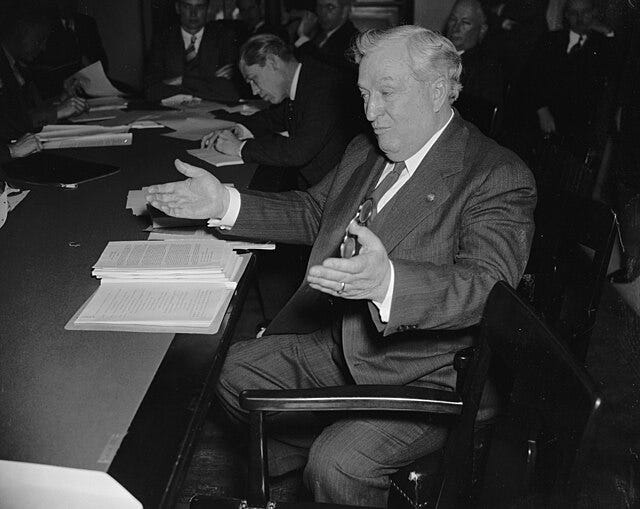
On February 7, 1950, two days before McCarthy’s Wheeling, West Virginia speech made him legend, J. Edgar Hoover appeared before McCarran’s Appropriations Committee and insisted that the FBI needed far more resources to fight communism.
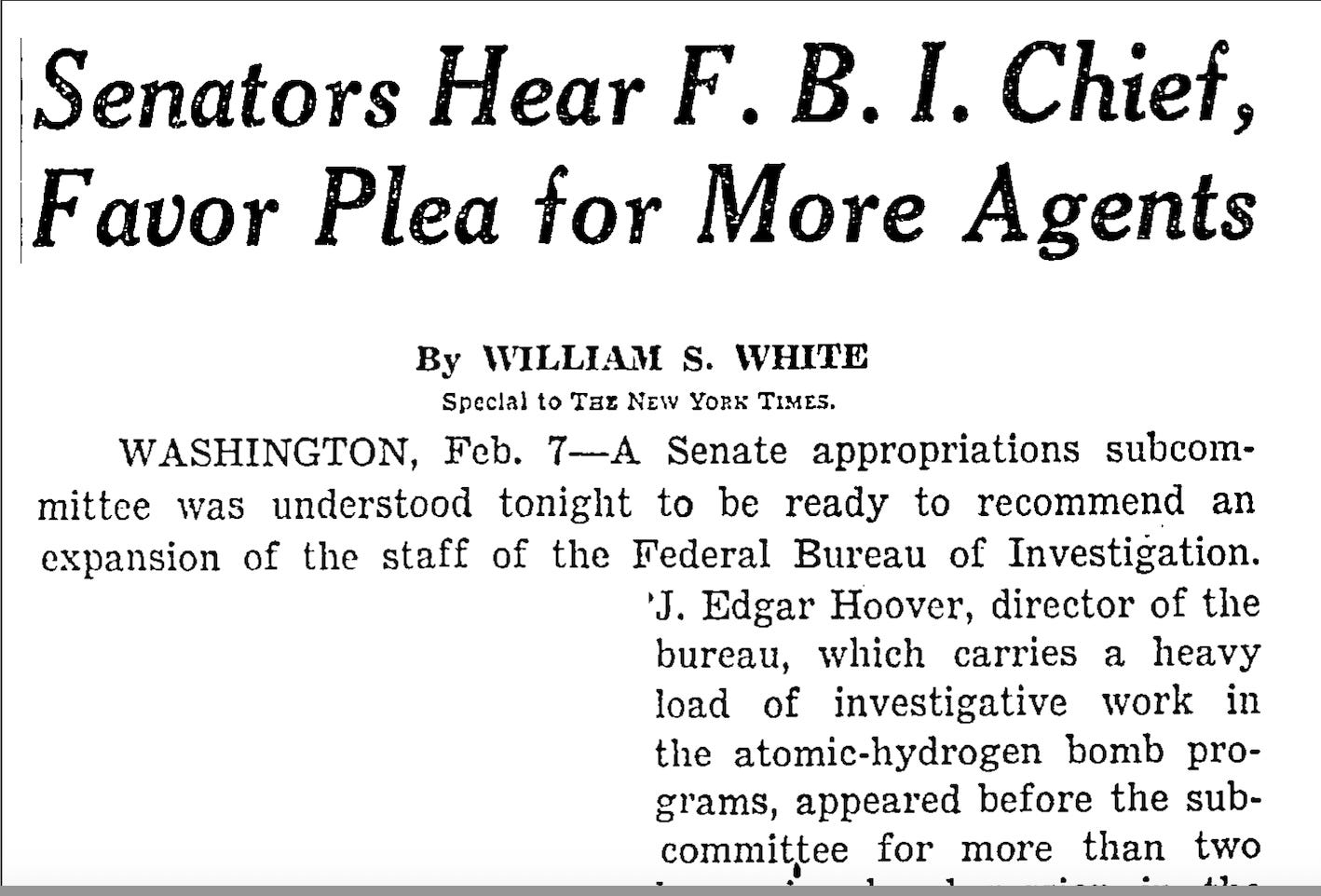
McCarran, who controlled Hoover’s purse strings, was already working the legislative side of the ledger. Once the Korean War broke out that summer, he had all he needed to put his masterplan in motion. When he rose in the Senate to present his bill in early September, he began by entering into the record a magazine article repeating J. Edgar Hoover’s oft-cited but never substantiated claim: that 55,000 Communists and half a million sympathizers were burrowed inside the nation, waiting to strike. Armed with those “facts,” McCarran launched into his long tirade about the “enemy within,” insisting that America was fighting on two fronts — the tanks in Korea and the saboteurs at home.
That phrase has never really left our politics. Just yesterday, Donald Trump told a roomful of generals that the real danger facing America is “invasion from within,” and he called for the military to be turned inward against domestic enemies. The continuity is chilling. Different century, but the same reflex: to weaponize fear by pointing it inward, at fellow citizens, and to call that vigilance.
McCarran’s performance was not improvisation but culmination. Called “the single most sweeping piece of anti-communist legislation in U.S. history” by Beverly Gage, author of a Pulitzer Prize winning biography on Hoover, McCarran’s bill had been stitched together across years. It drew on earlier loyalty-oath bills, then Representative Nixon’s 1948 attempt to force registration of Communist organizations, and J. Edgar’s long-standing demand for authority to round up “subversives.” McCarran, the shrewd Nevada senator who also shaped the state’s gaming monopoly, gathered these strands and sewed them into one fabric. The result was repression by design, with four legs sewn tightly together:
Registration: forcing Communist and “front” organizations to register with the government, branding members publicly and exposing them to blacklisting and prosecution.
Investigation: creating the Subversive Activities Control Board (SACB), a tribunal with power to declare entire groups subversive, stripping them of rights and reputations.
Detention: authorizing Title II emergency internment camps, a ready blueprint for rounding up “disloyal” citizens in a future crisis.
Deportation and Exclusion: widening the grounds for deporting immigrants and restricting entry, not for acts but for beliefs, turning ideology itself into a disqualifier.
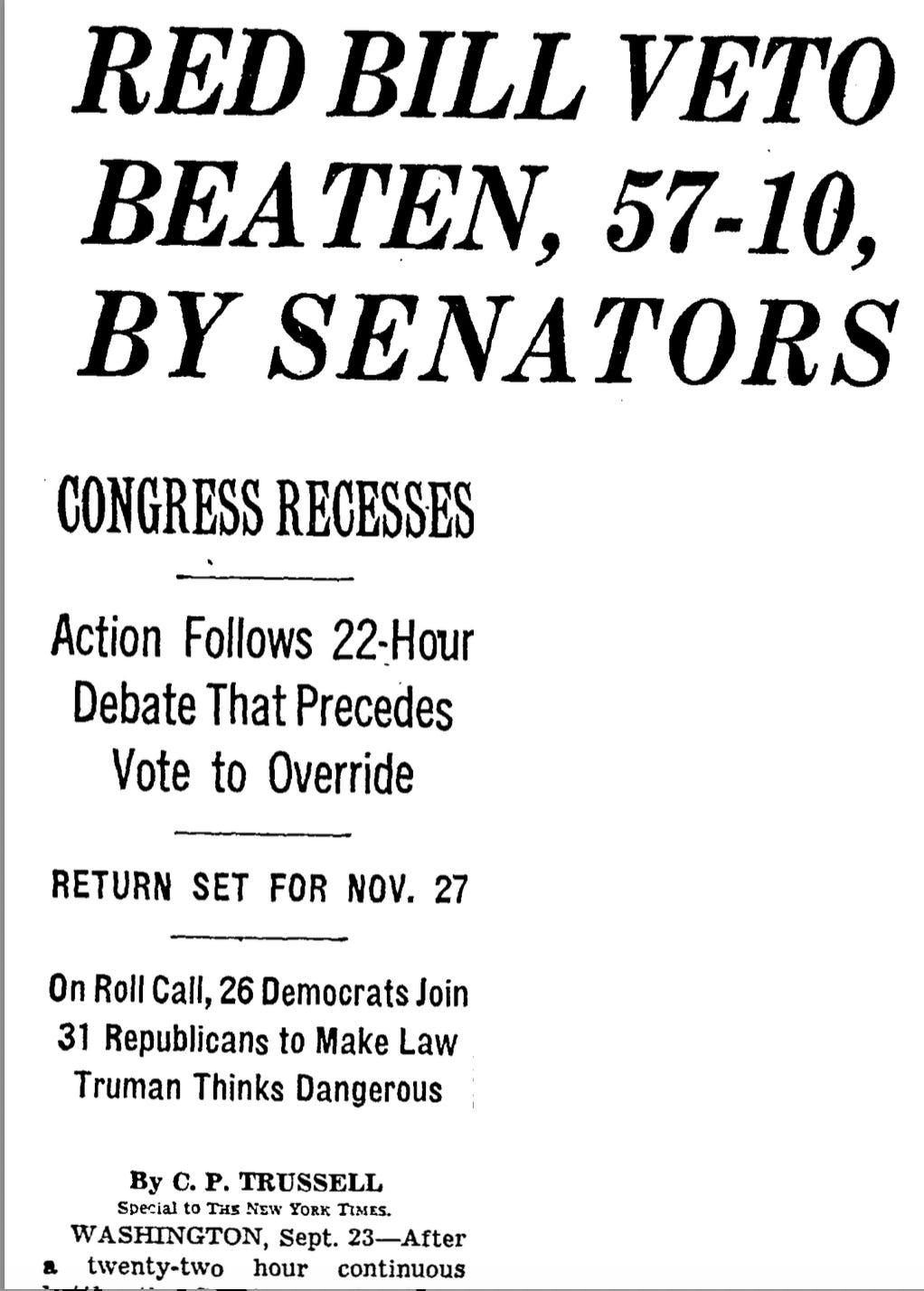
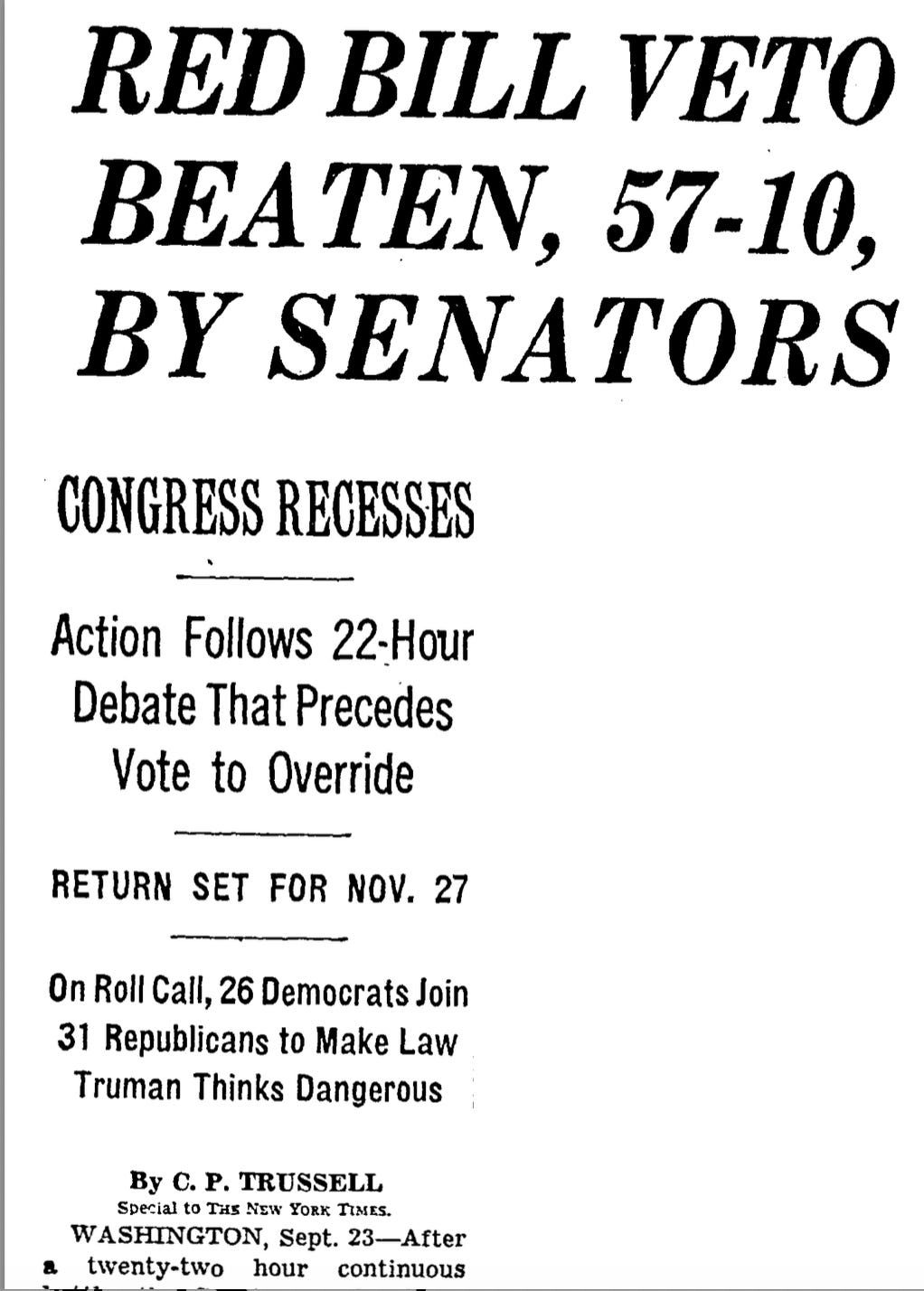
The New York Tmes September 24, 1950 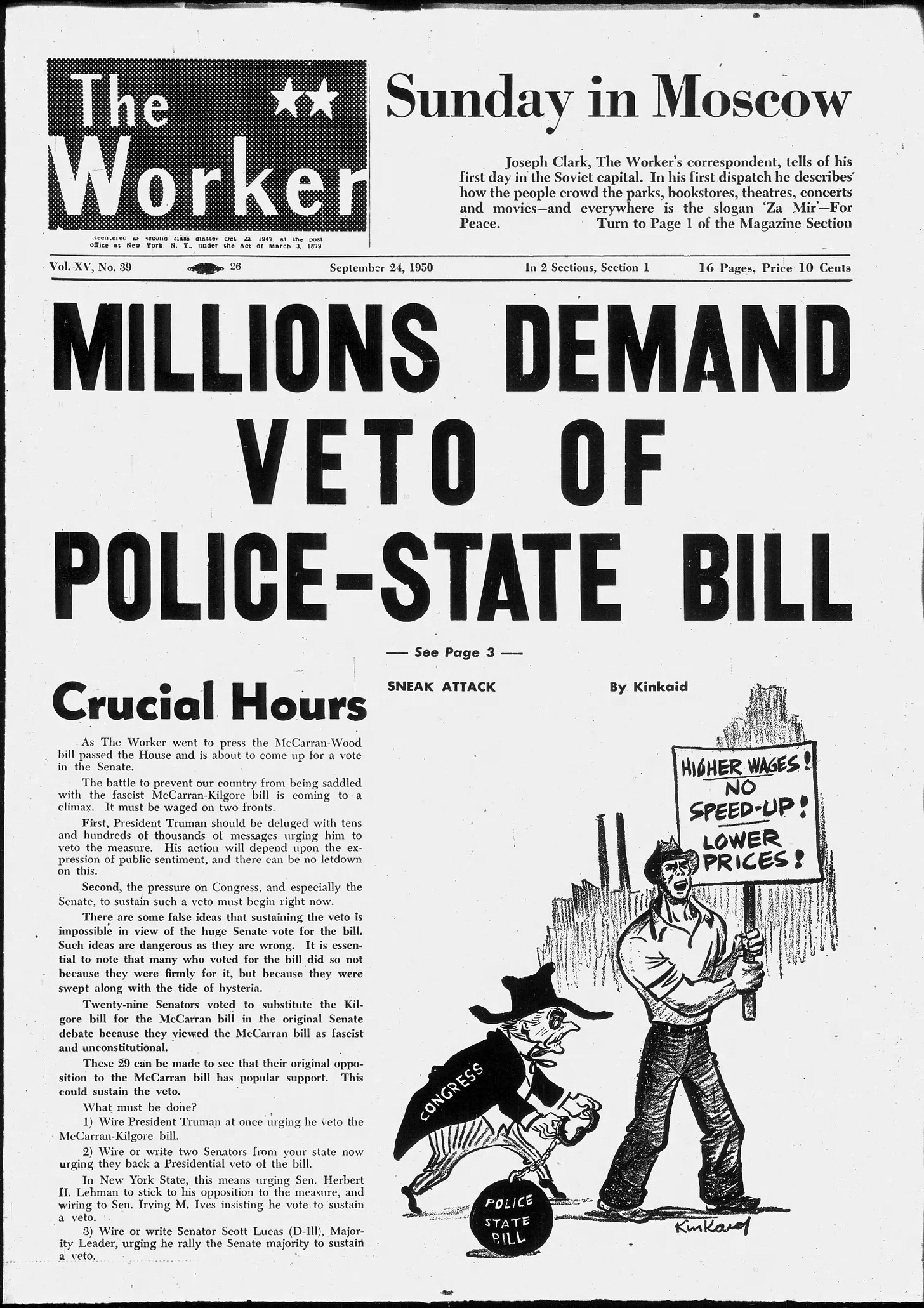
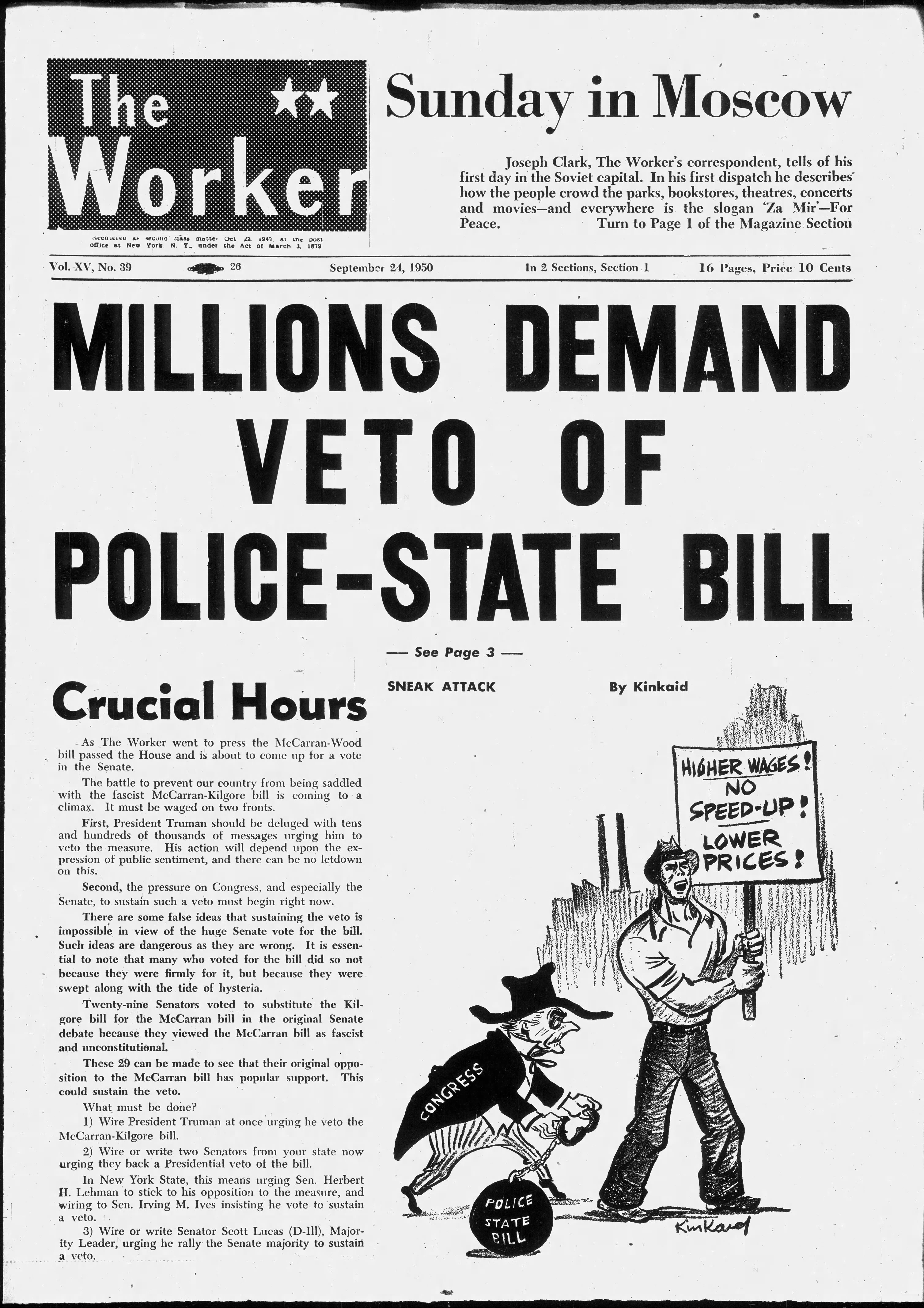
The Daily Word September 24, 1950
The durability of that machine is what makes the parallel with today so chilling. The Trump regime’s project is absolutely also about criminalizing ideology and purging immigrants; it is about stripping independence from everyone and everything, ensuring no city, no agency, no institution, no individual is beyond its reach. And the weapon it wields is fear. Investigations are launched to drain resources and intimidate; securing convictions is just an added bonus. Executive orders chill universities, corporations and contractors long before the courts enjoin them. Deportation raids terrify communities even as judges strike down the legal basis for them. Federal research funds are frozen, only to be restored after months of disruption. Cities are threatened with military deployments, their streets patrolled by federal forces. Even the Federal Reserve has come under siege: the attempted removal of Governor Lisa Cook “for cause” was blocked by a court, but the intent was unmistakable. No independence. Not anywhere. Not even for the central bank. This is not policy disagreement. This is siege.
And yet history tells us that siege is not the same as permanence. The Internal Security Act, too, seemed immovable. It lasted twenty years. But in time the stitches loosened.
Registration collapsed in 1965 when the Supreme Court ruled in Albertson v. SACB that compelled registration violated the Fifth Amendment. Title II’s detention camps were formally repealed in 1971, after Japanese American activists who remembered wartime incarceration mobilized against permanent internment powers. The SACB, once the feared ideological tribunal, was steadily undermined by defeats in court and Congress finally defunded then abolished it by the early 1970s. And the harsh deportation and exclusion provisions were narrowed as immigration law liberalized in the 1960s, eroding their force. What had been held tightly together came undone seam by seam, pulled apart by activists, lawyers, immigrants, and judges who each took on their piece.
That memory matters because as bleak as 2025 has felt and been, we are seeing threads being pulled. Judges have blocked anti-DEI executive orders, restored research funding to universities, including more than $500 million to UCLA, and stopped the administration from firing Federal Reserve Governor Lisa Cook. Law firms like Susman Godfrey have challenged executive orders and won. State coalitions have sued over birthright citizenship, immigration raids, and funding restrictions, often securing injunctions. Universities, associations, and NGOs have defended their autonomy in court. Cities have resisted federal deployments and data grabs. Collectively, professional bodies — from medical associations to bar groups — have raised reputational costs for compliance. I know what you are thinking; this is cute, Dax, but not enough. Not nearly. But each act of resistance tugs at the fabric, and every seam pulled weakens the architecture of fear.
Part of why these tugs matter is because of who we are as a people. Americans are unusually responsive to fear because siege lives in our collective DNA. We worry deeply that the world is out to get us, that what we’ve claimed can always be taken back. That worry is born of how America became America — fleeing, conquering, and taming. The result is a national psyche marked by siege, by the belief that safety is fragile and temporary. I first consciously encountered that tearing of the siege scar tissue post 9/11. I was in my 20s and living in New York, and I remember how quickly the nation forgot an election scandal and applauded the creation of Homeland Security — the agency that has since become the chief engine powering today’s internal crackdown.
The scar tissue leaves us open to manipulation, to the strongman who promises protection, to the demagogue who insists only he can save us.
But what makes this moment so dangerous is that the scar tissue rests on hollowed-out foundations. Just as McCarran’s era demanded loyalty oaths and drove educators from classrooms, today our institutions have been eroded, our civic lives narrowed, our circles of trust shrunk. The result is a culture where fear is always experienced as private precarity, not shared burden. And when fear is private, it is paralyzing. It isolates us, curls us into silence, and makes us more susceptible to those who wield it as a weapon.
It’s not only that we fear alone; we have been conditioned to live compartmentalized lives. Work selves vs. Personal selves vs. Political selves. Many of us, even now, assume that silence is the safer option, that discretion is always available, even when conscience is deeply unsettled. This conditioning makes Trump’s assault harder to comprehend, because his project is the opposite of separation. It blurs and bleeds into everything. It collapses the boundaries we rely on to feel safe. He ensures that politics will not stay in their box, that you cannot fly below the radar, that even private dissent is subject to punishment. And yet we go on behaving as though we are still playing the old game, where politics belongs to the side and work remains sacrosanct. That is our vulnerability. That is what he exploits.
Fear will always be the cudgel. Fear of raids, lawsuits, job loss, status loss—of being next. And Americans, with our scar tissue, our compartments, and now our hollowed institutions, are especially vulnerable in this moment.
But that vulnerability does not have to be our destiny. The record of the McCarran Act’s undoing shows that siege doesn’t last forever. It can be survived, resisted, and dismantled. But it requires different actors pulling at different seams, each from their own lane. No one can fight every battle. Lawyers must litigate. States must sue. Institutions must defend. Activists must narrate. Journalists must expose. Each tug matters, and together they unravel the whole.
But only if we know what it’s built from, remember what fear does to us, and commit to pulling the seams that are ours to hold.
McCarthy was the carnival barker — loud, distracting, impossible to ignore. But McCarran was the one stitching repression together behind the curtain. What he stitched out of fear was only ever as strong as the fear itself. If we can see the seams, we can pull them, and when we do, even the tightest weave can come undone.